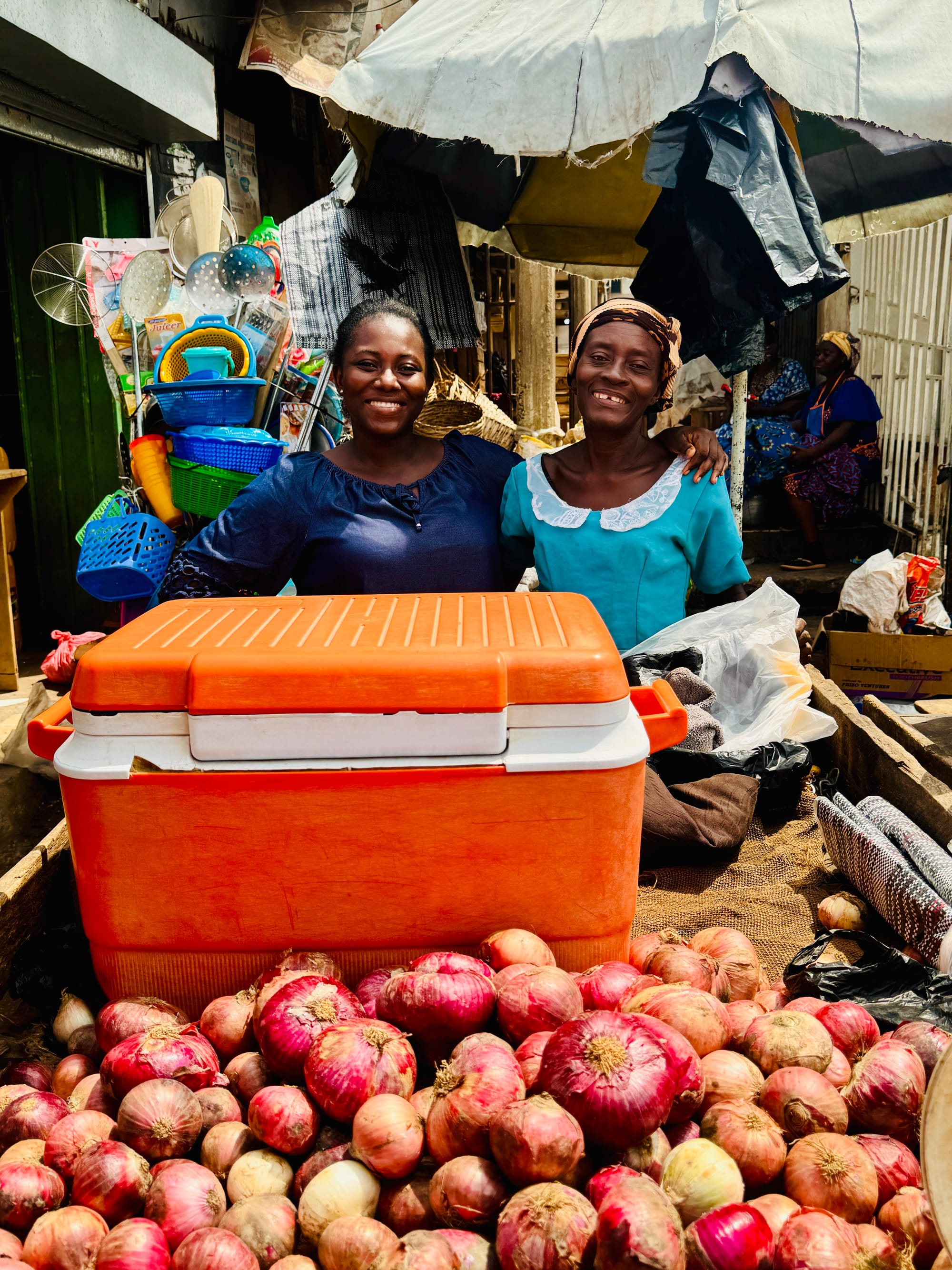
Author: Jacqueline Banahene
The impact of Global warming and heat stress among outdoor workers in Ghana.
‘Climate change affects us all, but not equally. The poor are most likely to suffer first and worst from the impacts of climate change, though the least responsible for the emissions’’ (Ban Ki-Moon, 2009).
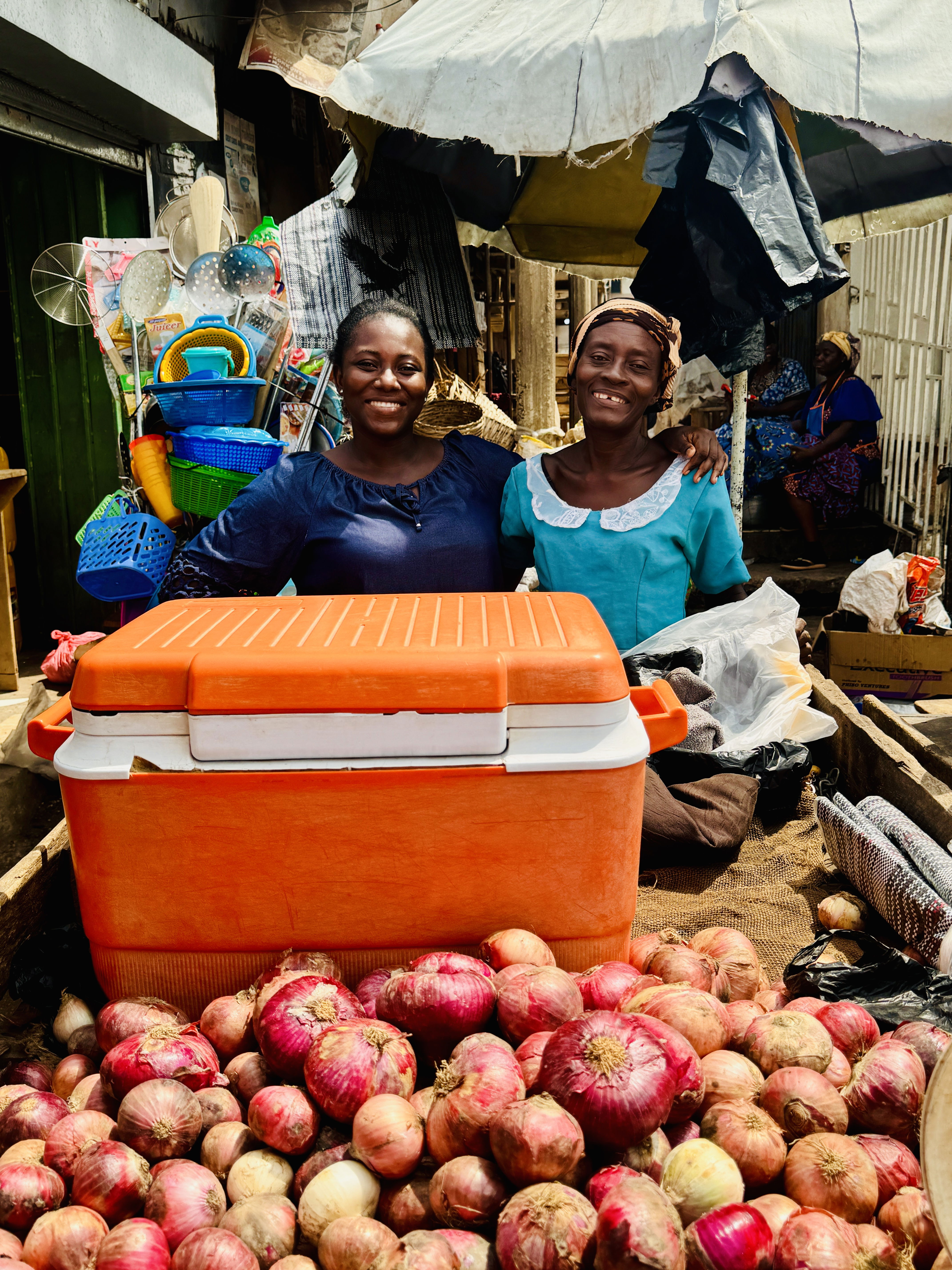
Source: Jacqueline Banahene
The Earth is warming up faster than predicted. Currently, about 40% of the global population lives in areas where average daytime temperature exceeds 30°C most of the year (Klein & Anderegg, 2021). This has led to a surge in climate-related impacts of elevated levels of heatwaves and their impact. This heat is felt across regions, both in the Global North and South, with the global south experiencing the much higher impact due to low adaptation and mitigation measures.
Although the effect of global warming is happening fastest in the far north, for example, the Nordic region recorded its highest extreme summer heatwaves in history last year (2025). For most of that same year, 2025, excess heat was also felt in other countries within Europe, including Spain, which recorded 3255 deaths due to heat compared to 2534 in 2024 (Thykjaer, 2025). However, heat stress is more detrimental in most African countries, especially in the west.
In the year 2024, West African countries like Mali experienced extreme heat, with some areas hit by a temperature of 48,5°C, recording more than 100 deaths as victims of the heat wave. Malian meteorologists say the city of Southwestern Kayes recorded the hottest day in African history on April 4, 2024 (African Perception,2024). Unfortunately, Africa remains the least prepared in terms of adaptive strategies to heat stress. In countries like Ghana, climate change is worsening the impact of excessive heat exposure on the population, especially outdoor workers. This workforce has jobs that are mostly carried out under hot temperatures with limited safety and adaptive strategies (Ansah et al., 2021). They are therefore exposed to heat-related health issues like heat strokes, mental instability, skin irritations, and many others (Nunfam et al., 2018).
Even though governments have committed to reducing climate change's impact and set up appropriate mitigation through globally agreed policies like the Nationally Determined Contribution (NDC) under the Paris Agreement (2020-2030), the impact is still intriguing. Kench et al., (2018) argue that climate change and natural hazards risk are complex issues which require the combined effort of science, policy, and community engagement approaches.
Ghana’s Informal Sector
The informal sector in Ghana is a central pillar of the national economy, employing the majority of the workforce and providing livelihoods for millions of people, particularly in urban and peri-urban areas. In Ghana, the informal sector employs about 80% of the workforce yet contributes to about 27% of the GDP according to the Ghana Statistical Survey in 2024 (GSS,2024).
Informal work is largely characterised by small-scale, self- employment, limited regulation, and the absence of formal contracts or social and physical protection. A significant share of informal economic activity takes place outdoors and is therefore highly exposed to weather and climate conditions. Common examples include market traders and hawkers who sell food, clothing, and household goods in open markets and along roadsides; head porters (kayayei) who carry goods in markets under intense heat; street food vendors who cook over open fires; car washers, mechanics, and scrap dealers working in open spaces; construction labourers; and small-scale agricultural workers. These outdoor informal workers often operate with little access to shade, clean water, or rest facilities, making them particularly vulnerable to heat stress, heavy rainfall, and other climate-related risks.
The health impact of heat stress on outdoor workers and their adaptive strategies.
Some outdoor workers in Ghana spend hours engaging in strenuous activities under the hot weather with minimal protection or precaution measures. Report from World Health Organization (WHO) in 2021 on non-melanoma skin cancer from solar ultraviolet radiation for 183 countries, 2000–2019 indicates that in 2019, an estimated 18,960 deaths and 0.5 million disability-adjusted life years (DALY - the number of years lost due to ill-health, disability or early death) from non-melanoma skin cancer were attributable to occupational exposure to solar ultraviolet radiation (WHO, 2021). This means that these workers who spend hours under the scorching sun are at high risk of skin cancer-related issues like non-melanoma cancer.
Aside from this, scientists perceive that the ideal body temperature needed by the human body is around 37°C, but sometimes it may change depending on its exposure to extreme conditions. Therefore, engaging in physical activities under extreme heat without adequate hydration will cause more harm to the body. Medical statistics have shown that this exposure coupled with poor air quality, industrial waste exposure and dehydration results in health related issues such as heatstroke, heart or cardiovascular diseases, fatigue, sleeplessness, hot and dry skin, heavy sweating, exhaustion, headache, respiratory challenges, immune dysfunction, nose bleeding, fainting, asthma, skins rashes, digestive problems, kidney diseases, cancer, and (in extreme cases) death (Amoadu et al., 2023).
A deeper study like Sasai et al., (2021) on the relation between heat stress and the effect on the heart and kidneys indicates that excess heat stress, aside from causing heat stroke, can also lead to acute and chronic kidney diseases. However, even lesser heat stress can also increase the risk of kidney stones and precipitate cardiovascular events (ibid). Other studies have also associated it with mental issues such as anxiety, depression, hostility, anger, and many others due to the frustration from exposure to excessive heat.
To adapt to these harsh conditions, some women resort to covering up fully to prevent direct contact with the sun on their skin, creating even more heat within. Others also resort to using large umbrellas and hats to prevent direct sunlight. These hats are designed to provide shade for the face and neck, reducing skin irritation.
Gender variation of the impact of Heat Stress among outdoor workers
Studies have shown that the impact of heat waves varies across men and women, with women carrying the highest burden. Even though findings from Odonkor & Adams (2021) indicated that male outdoor workers are 1.3 times more likely than females to be affected by heat stress, Ioannou et al., (2022) argue that women have a greater cardiovascular burden during stress. Thus, women have a reduced capacity to disperse heat during heat stress. Furthermore, some outdoor female workers deliberately reduce hydration to avoid using public toilets due to hygienic conditions, leading to excess dehydration among them (Ioannou et al., 2022).
In Ghana, across the streets of urban centres like Accra, women are seen carrying young children mostly on their backs, while trading under the hot sun. Likewise, Syed et al. (2022) research on extreme heat and pregnancy outcomes indicates that poor communities have disparities in maternal and child health, which is aggravated by extreme environmental issues like heat stress. Some of these pregnancy outcomes include low birth weight, malnutrition, infections, spontaneous abortions, preterm and post-term birth (Syed et al, 2022). Additionally, there are also reports on mental issues associated with depression, anxiety, and reduced brain function. Aside from women, elderly people, as well as young children, are also seen engaging in street vending under the harsh weather conditions, exposing them to various medical problems.
Government Interventions and Existing Climate Policies
Governments pledged under the 2015 Paris Agreement not to exceed 1.5 C of global warming. Unfortunately, as the world approaches the 2030 target, discussions are now centred on how to reduce the adverse effects global warming has on society. Recently, the government of Ghana has revised its Nationally Determined Contribution (NDCs) to do its part by pledging its commitment to do the following;
- Enhance implementation of climate actions by strengthening the mobilisation of public, private and grassroots participation; and
- Increasing the investment credentials and ambition across mitigation, finance and adaptation.
- Put Ghana's development on an accelerated path for achieving" a resilient and low carbon society by promoting economic growth, climate protection and air quality benefits, youth and women empowerment and social inclusion in the next decade and beyond" (MESTI and EPA, 2021)
However, implementation has always been a challenge and is mostly attributed to financial incapacity, technology, or institutional support. Despite these factors, one key barrier to implementation is the lack of involvement of key stakeholders ie. government at all levels, the private sector, and not to forget Trans National Companies (TNC) with their immense contribution to global warming. A positive local development in, for example, Accra, is the development of shades at public transportation waiting points. Sa’ad et al (2025) argue that the lack of involvement from affected communities and stakeholders’ local knowledge hinders the effectiveness of adaptation strategies. It is therefore important that awareness and education on climate change and global warming are made available to all members of the community, including the most vulnerable, in languages they best understand. Additionally, it is important to empower NGOs and civil society to both amplify the voices of the affected local people to policymakers and to implement simple measures.
A Case Study of Madina Market Vendors
In Ghana, market centres serve as a crucial economic avenue for the transaction of goods and services. Madina market is one of the markets situated in the heart of the Greater Accra Metropolitan Area (GAMA), known for its unique diversity of goods and services. At Madina Market, vendors present their goods in varied ways; while some can afford a storehouse where goods are kept and sold, others put them on bare tables with large umbrellas. Those who are not able to afford these umbrellas are also seen walking through the markets with their goods placed on their heads.
In an interview with some Madina Market women on their experiences with the heat, some women narrated that they deal with a lot of fever, body pains, chronic headaches and chest pains due to excess heat and sunburns. This causes a lot of absenteeism as traders usually take a day or two off to seek medical attention. As one commented;
‘I have worked in the market for over 30 years, and it has not been easy. Rain or shine, we have to be here to survive. For some time now, I have been dealing with chest pain and fever at night. I am sure it is because of the heat. We make money but have to spend it all in the hospital’.Woman 2.
Others also narrated how they have been battling with skin rashes and irritations. For example, one commented;‘
Look at my skin, I have been dealing with these rashes for years, and I have spent a lot of money on them. At night, I am not able to sleep because of itchiness. Woman 1 (as she shows off her skin).
Furthermore, common among the responses were the expectations these women had with regard to interventions from the government. For example, one of them expressed that ;
"We really wish that the government could provide free medications like painkillers, and also ask hospitals to provide us with free checkups like BP and blood sugar. There was one time I had really high blood sugar, and I did not know until it almost killed me”.
However, despite these challenges, these women had developed their own local adaptation methods to heat. Some resort to the use of large umbrellas for shade. As seen in the picture below.
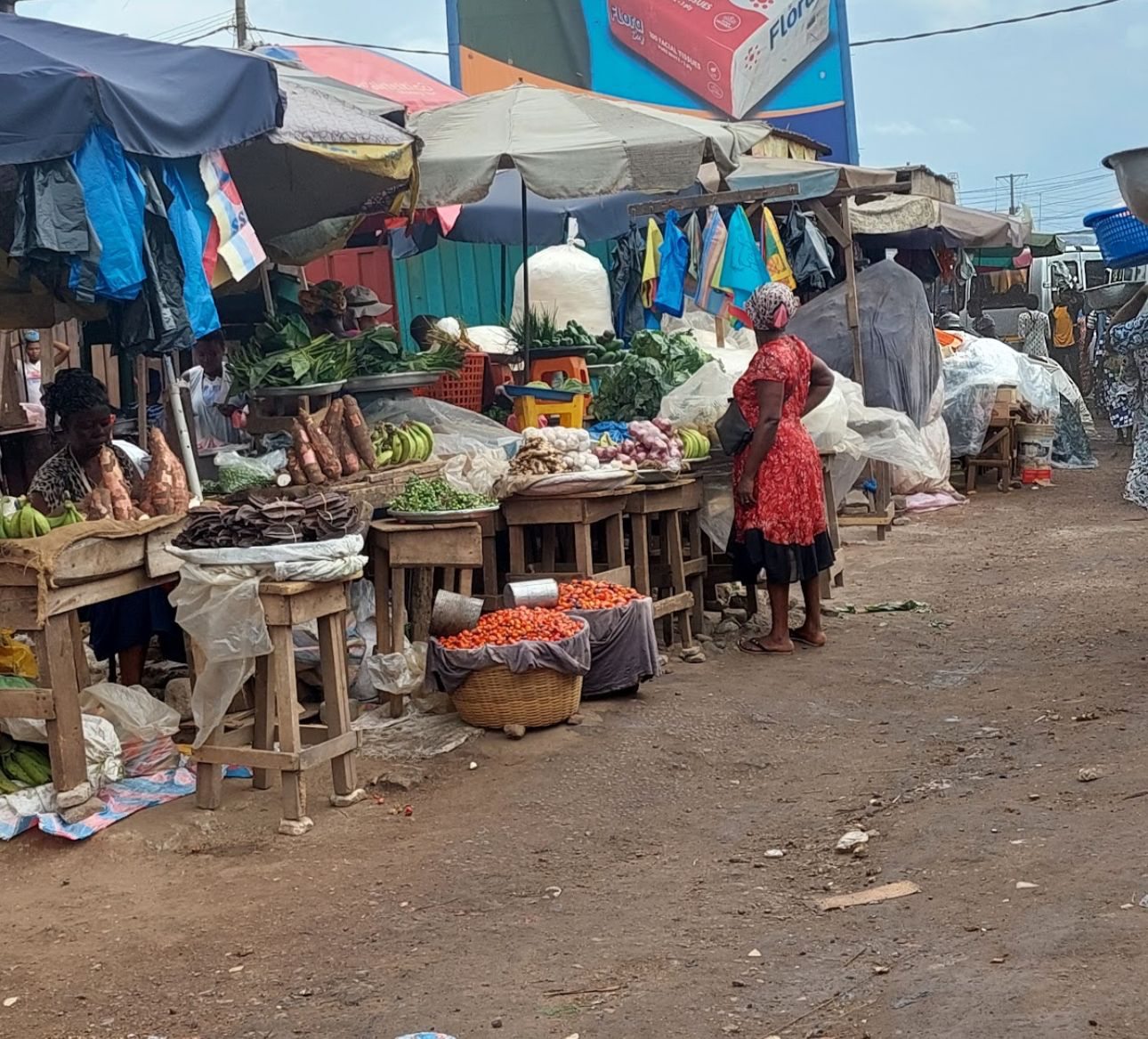
Photocredit: Mindtrip
Despite this adaptation method, traders still express intense heat even under these umbrellas and classify it as only blocking direct sunshine, but not the heat. Another means of survival for these traders, as mentioned by the respondents, included the use of excess clothes to cover both legs and hands, as well as large hats to prevent direct sunshine from their skin. Others also expressed that they sometimes join their friends who have storage rooms for a break from the sun if the heat is intense. This was very common among traders or hawkers who had no specific place to sit and trade like headpotters.
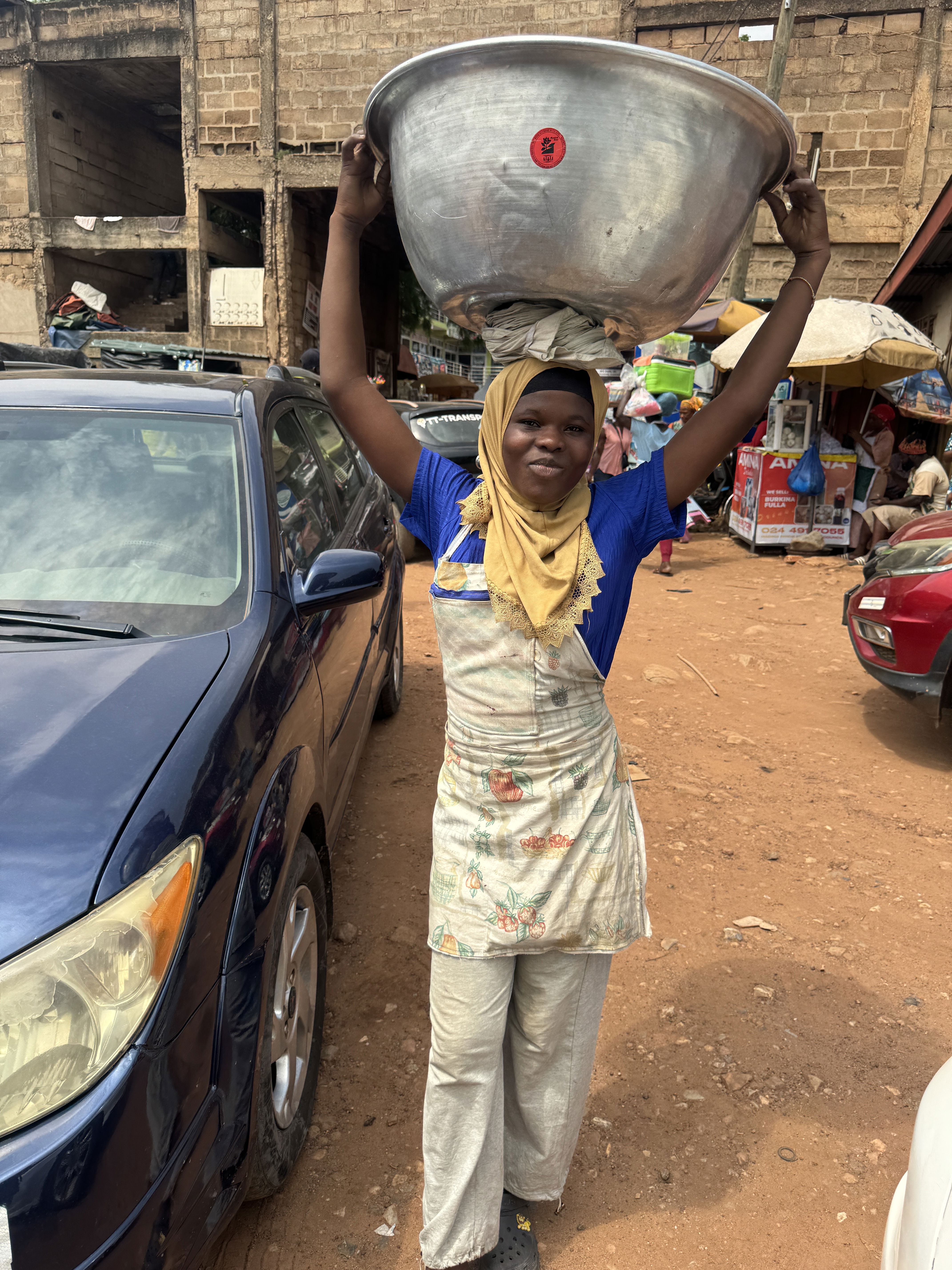
Their overall response shows that the most affected people lack expert knowledge with regard to the adverse effects of climate-related hazards like heat stress, and this was evidenced in their response to the questions. Also, most of the interviewees were only interested in temporary solutions like the provision of first aid and medications like painkillers. Therefore, it is important that there is effective collaboration between the government, private sector, TNCs and others in finding global and local solutions to the adverse effects of global warming, like heat stress. There is also the need for effective citizen engagement in forming practical solutions, which can be made possible by empowering stakeholders and NGOs who are dealing with climate solutions at the grassroots level through awareness creation.
Recommendations
- Green city and community developments.
- Low-hanging fruit for easing the conditions for the workers
- The government should focus more on community adaptation, stakeholders and citizen co-creation of policies that address these climate needs. Thus, policymakers should consider co-adaptation and policy co-creation as one strategic process of ensuring effective climate policies.
- This can be simple actions such as treeplanting for shade, reinforcing regulations on green space around houses. Keep green spaces for water sinks. White roofing/urban gardening. Low-hanging fruit like hats and water for outdoor workers.
- Continuous Awareness creation and education on the importance of reducing greenhouse gas emissions, climate change and sustainability-related issues.
- Provision of funds to support stakeholders' engagements and collaboration.
- Provision of safe working environments and training of outdoor workers on safety measures to reduce the impact of climate-related occupational hazards.
- Regular medical checkups and assistance to outdoor workers.
Conclusion
Although global warming is global, the local effect needs to be dealt with as nations, Trans National Companies (TNC), the private sector in general and civil society deal with the root cause of the problem.
In many countries in the global south, like Ghana, that means, among other things, addressing the effect on people, women in particular, working under the sun. The effect is immense and a treat to people's health and well-being. While working on the overall cause of the increasing heat, simple measures can improve the immediate situation. Lastly, there is also the need to empower stakeholders and NGOs with resources to help them in analysing the combined strategies of government and local adaptation methods to achieve heightened mitigation levels and adaptation to climate change.
REFERENCES
African Perceptions. (2024b, April 9). Heat waves cause havoc in Mali, killing 100 people. Heat wave causes havoc in Mali, kills 100 people - African Perceptions.Amoadu, M., Ansah, E. W., Sarfo, J. O., & Hormenu, T. (2023). Impact of climate change and heat stress on workers’ health and productivity: A scoping review. The Journal of Climate Change and Health, 12, 100249. https://doi.org/10.1016/j.joclim.2023.100249.
Ansah, E. W., Ankomah-Appiah, E., Amoadu, M., & Sarfo, J. O. (2021). Climate change, health and safety of workers in developing economies: A scoping review. The Journal of Climate Change and Health, 3, 100034. Climate change, health and safety of workers in developing economies: A scoping review - ScienceDirect.
Anthony I Reeder, Andrew Gray, Judith P Mccool, Occupational Sun Protection: Workplace Culture, Equipment Provision and Outdoor Workers’ Characteristics, Journal of Occupational Health, Volume 55, Issue 2, March 2013, Pages 84–97, https://doi.org/10.1539/joh.12-0182-OA.
Environmental Protection Agency (EPA) and the Ministry of Environment, Science, Technology and Innovation (MESTI) (2021, September). Updated Nationally Determined Contribution under the Paris Agreement (2020 - 2030). Ghana’s Revised Nationally Determined Contribution under the Paris Agreement.
Future climate in Norway: More floods, droughts, and less snow. (2025, October 28). Bjerknes Centre for Climate Research. https://bjerknes.uib.no/en/news/framtidens-klima-i-norge-flere-oversvommelser-mer-torke-og-mindre-sno.
Ghana Statistical Service. (2024). 2024 Statistical Year Overview. Ghana Statistical Service. Retrieved from https://statsghana.gov.gh/gssmain/fileUpload/pressrelease/Ghana%20Statistical%20Service%202024%20Releases%20-%20online.pdf
Habibi, P., Razmjouei, J., Moradi, A., Mahdavi, F., Fallah-Aliabadi, S., & Heydari, A. (2024). Climate change and heat stress resilient outdoor workers: findings from systematic literature review. BMC public health, 24(1), 1711.Ioannou, L. G., Foster, J., Morris, N. B., Piil, J. F., Havenith, G., Mekjavic, I. B., Kenny, G. P., Nybo, L., & Flouris, A. D. (2022). Occupational heat strain in outdoor workers: A comprehensive review and meta-analysis. Temperature, 9(1), 67–102. https://doi.org/10.1080/23328940.2022.2030634.
Kench, P. S., Ryan, E. J., Owen, S., Bell, R., Lawrence, J., Glavovic, B., Blackett, P., Becker, J., Schneider, P.,Allis, M., Dickson, M., & Rennie, H. G. (2018). Co-creating resilience solutions to coastal hazards through an interdisciplinary research project in New Zealand. Journal of Coastal Research, 85, 1496–1500.https://doi.org/10.2112/si85-300.1.
Klein, T., & Anderegg, W. R. (2021). A vast increase in heat exposure in the 21st century is driven by global warming and urban population growth. Sustainable Cities and Society, 73, 103098. https://doi.org/10.1016/j.scs.2021.103098.
Ministry of Environment, Science, Technology and Innovation & Environmental Protection Agency. (2021). Ghana: Updated Nationally Determined Contribution under the Paris Agreement (2020–2030). United Nations Framework Convention on Climate Change. https://unfccc.int/sites/default/files/NDC/2022-06/Ghana%27s%20Updated%20Nationally%20Determined%20Contribution%20to%20the%20UNFCCC_2021.pdf.
Nunfam, V. F., Van Etten, E. J., Oosthuizen, J., Adusei-Asante, K., & Frimpong, K. (2019). Climate change and occupational heat stress risks and adaptation strategies of mining workers: perspectives of supervisors and other stakeholders in Ghana. Environmental research, 169, 147-155.Odonkor, S. T., & Adams, S. (2022). Climate change-mediated heat stress vulnerability and adaptation strategies among outdoor workers. Climate and Development, 14(7), 591–599. https://doi.org/10.1080/17565529.2021.1954867.
Sasai, F., Roncal-Jimenez, C., Rogers, K., Sato, Y., Brown, J. M., Glaser, J., Garcia, G., Sanchez-Lozada, L. G., Rodriguez-Iturbe, B., Dawson, J. B., Sorensen, C., Hernando, A. A., Gonzalez-Quiroz, M., Lanaspa, M., Newman, L. S., & Johnson, R. J. (2021). Climate change and nephrology. Nephrology Dialysis Transplantation, 38(1), 41–48. https://doi.org/10.1093/ndt/gfab258.
Sa’adi, Z., Alias, N. E., Yusop, Z., Mei, N. S., Wai, C. W., Arman, N. Z., Tajuddin, W. a. N. W. A., Ramzan, M. A., Aris, A., Talib, J., Rosli, A. S., Noor, Z. Z., & Salmiati, S. (2025). Enhancing climate change-induced flood co- adaptation in the Johor River basin, Malaysia: A democracy mapping approach with key technical stakeholders. Environmental Science & Policy, 165, 104015. https://doi.org/10.1016/j.envsci.2025.104015.
Syed, S., O’Sullivan, T. L., & Phillips, K. P. (2022). Extreme Heat and Pregnancy Outcomes: A Scoping Review of the Epidemiological Evidence. International Journal of Environmental Research and Public Health, 19(4), 2412. https://doi.org/10.3390/ijerph19042412.
The Business Standard. (2026, January 14). 2025 was the world’s third-warmest year on record: EU scientists. The Business Standard. https://www.tbsnews.net/environment/climate-change/2025-was-worlds-third-warmest-year-record-eu-scientists-1333736.
Thykjaer, C. (2025, August 6). Amid brutal heatwaves, Spain sees one of its worst months for heat-related deaths. Euronews. https://www.euronews.com/health/2025/08/05/amid-brutal-heatwaves-spain-sees-one-of-its-worst-months-for-heat-related-deaths.
World Health Organization. The effect of occupational exposure to solar ultraviolet radiation on malignant skin melanoma and non-melanoma skin cancer: a systematic review and meta-analysis from the WHO/ILO Joint Estimates of the Work-related Burden of Disease and Injury. Geneva: World Health Organization, 2021.