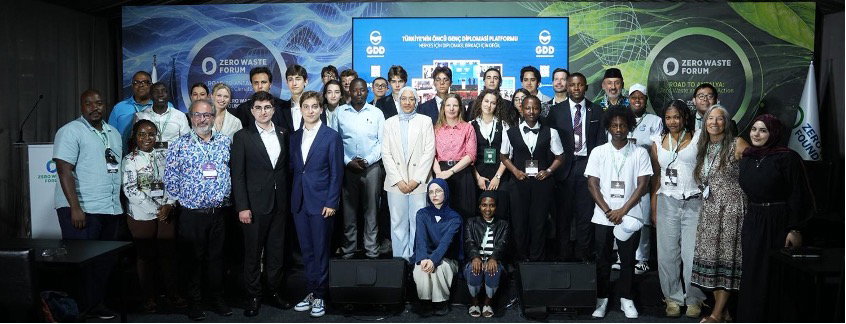
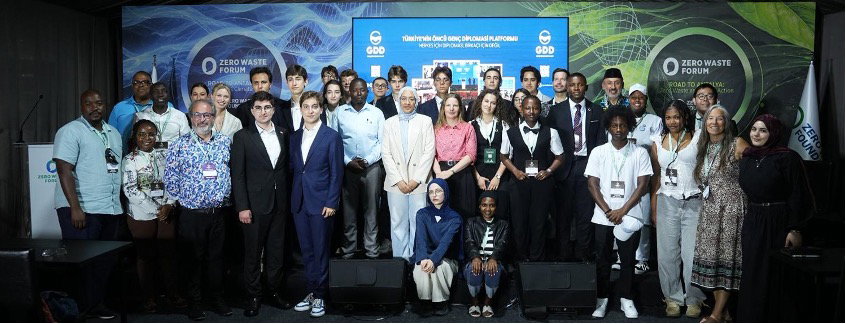
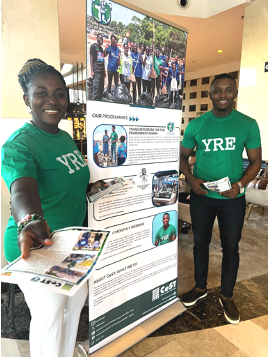
Isaac Aryeetey, YRE Ghana Youth Board Chair, & Jacqueline Banahene, Administrative Assistant, CeST
Under the theme “Road to Antalya: Zero Waste as Climate Action,” the Forum held in Istanbul, Türkiye, from 5–7 June 2026, highlighted the critical role of zero-waste approaches in addressing climate change and advancing sustainable development as we prepare for COP 31 in November. This global call for climate action brought together world leaders, ministers, mayors, senior executives, international experts, youth representatives, academic institutions, civil society organisations, and non-governmental organisations in the vibrant city of. The gathering provided a unique platform to discuss, reimagine, and advance zero waste as a practical pathway for climate action,sustainable development and circular economy.
Throughout the event, participants engaged in plenary sessions, roundtable discussions, and thematic dialogues that explored the relationship between waste management, climate change, economic transformation, and environmental sustainability from diverse perspectives.
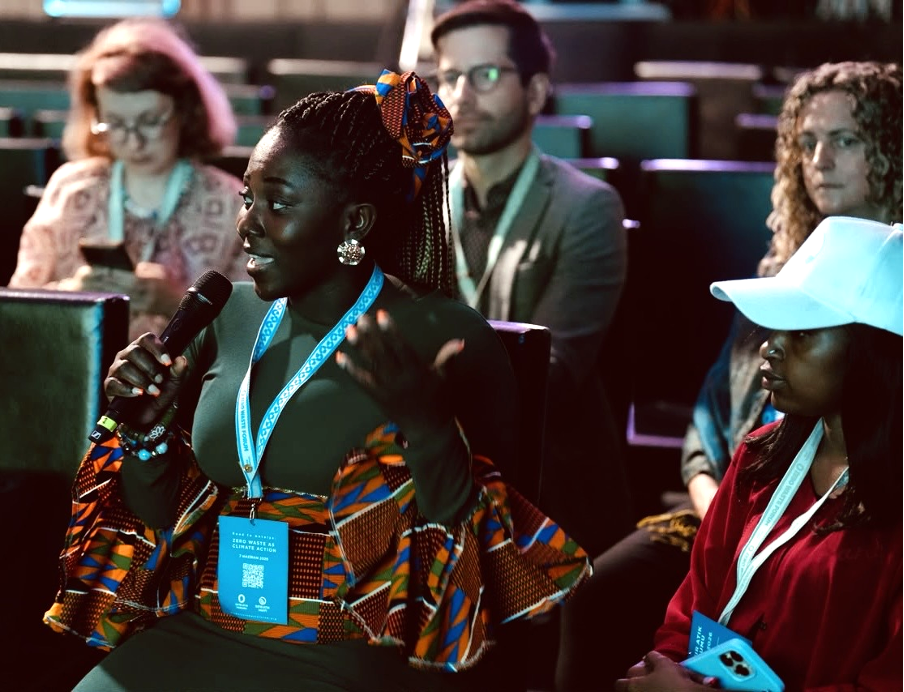
One of the key components of the Forum was the Youth Session, which provided a valuable platform for dialogue, knowledge exchange, and collaboration among youth leaders, policymakers, civil society organisations, academics, and environmental practitioners from around the world. To facilitate focused engagement, the session was organised around two thematic tracks: Circular Economy and Economic Transformation and Sustainable Energy Transition.
Given the focus of our organisation, Center for Sustainable Transformation (CeST) and the Young Reporters for the Environment (YRE) program, commitment to promoting circular economy approaches, our YRE delegation participated in the Circular Economy and Economic Transformation track. Discussions centred on three key areas that are all relevant for the tasks to be resolved in Ghana: the banning of single-use products, corporate responsibility for waste management throughout the production cycle, and the effectiveness of existing recycling systems. These conversations were further enriched by discussions on circular economy principles, food security, biodiversity conservation, and the role of Indigenous and traditional knowledge systems in sustainable resource management.
The Youth Session featured interactive question-and-answer segments and group discussions, enabling participants from all corners of the world to critically examine issues relating to environmental policy developments, implementation, the role of governments, consumer behaviour and consumption patterns, climate finance, accountability, economic development, environmental sustainability, and citizen engagement in climate action. This participatory format ensured that participants were able to contribute their perspectives, experiences, and knowledge to the discussions.
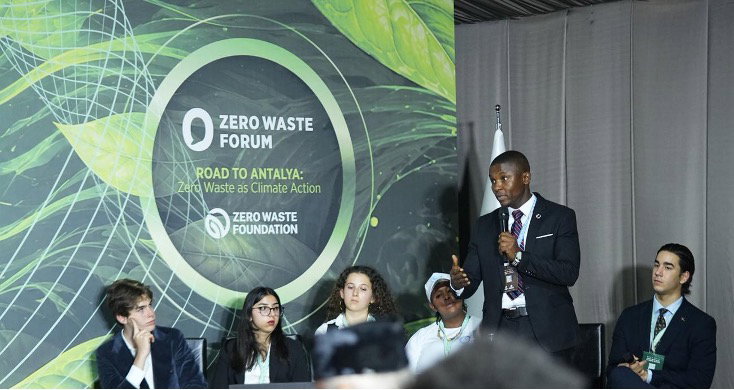
A key outcome of these discussions was the development of a Youth Declaration for Circular Economic Transformation, which is intended to contribute to the COP31 Action Agenda and the Road to Antalya Outcome Statement.
Throughout the discussions, participants identified six major challenges confronting the transition towards a more sustainable and circular economy:
Inefficiencies in organic waste management and food systems; Disproportionate overconsumption of global resources; The centralisation of financial and energy systems; The tension between economic growth and environmental sustainability; Weak government accountability in policy implementation; and The limited recognition and integration of traditional and local knowledge.
Drawing on lived experiences, existing initiatives, and evidence-based discussions, participants collectively proposed a set of recommendations and commitments to address these challenges. These included:
- Building community-led circular food systems;
- Decentralising and localising financial resources;
- Reducing overconsumption and promoting resource efficiency;
- Strengthening government accountability;
- Implementing sector-specific and enforceable policies; and
- Integrating traditional and Indigenous knowledge into circular economy solutions.
The session concluded with the adoption of the Declaration on Circular Economic Transformation, which will be presented to the COP31 Youth Climate Champion Sally Higgins from Australia, and incorporated into broader climate policy discussions leading up to COP31.
One of the most significant takeaways from the Forum was the recognition of young people as essential actors in advancing zero-waste initiatives and climate action. Discussions consistently emphasised the need to move beyond simply raising awareness and instead create meaningful opportunities for young people to contribute to policy development, innovation, decision-making, and implementation. The Forum reinforced the message that while young people have a critical role to play in shaping a sustainable future, meaningful transformation requires collective action, inclusive governance, and shared responsibility across all sectors of society.
Lesson learnt From Zero waste Conference: The need for Youth, government and Stakeholders collaboration on waste management practices in Ghana.
The Zero Waste Forum underscored the urgent need for collaborative approaches to climate resilience and adaptation approaches. This in effect means the need to bring together vulnerable communities, international agencies, national and local governments, civil society organisations, the private sector, and other key stakeholders. The Road to Antalya Conference provided a platform for diverse perspectives, experiences, and initiatives, demonstrating how collaboration can help bridge the persistent gap between policy formulation and implementation.
For Ghana, these lessons are particularly relevant. Addressing the country’s waste management challenges requires a shift away from approaches that place the primary responsibility on already resource-constrained institutions and communities. Instead, there is a need for a radical shift from a linear economy where extracted resources become waste to a circular economy where resources are reused in new products and production lines. This requires a systems approach to the patterns of production and consumption - a core driver in the economy. This can only be achieved through more focused education, product design and material choices; stronger collaboration, clearer accountability, and greater investment in locally driven solutions as Hilde Opoku writes in her analysis of Norway and Ghana's approach to the Sustainable Development Goals.
The discussions at the Forum highlighted the importance of ensuring that solutions are not developed solely at the national or international level but are informed by the experiences, knowledge, and capacities of communities on the ground. In Ghana, empowering grassroots institutions and communities to develop practical and locally relevant solutions to waste management could play a significant role in shaping more inclusive, effective, and sustainable policies. Local knowledge in addition to government strategies and actual private sector involvement will lead to a more inclusive and effective waste management policies.
A circular economy requires more than improved waste collection and disposal. It requires a fundamental transformation in how resources are produced, consumed, reused, and managed. Such a transformation cannot be achieved through government action alone. It requires the active participation of communities, businesses, civil society organisations, researchers, young people, and other stakeholders across the entire value chain.
Meaningful climate action therefore requires moving beyond policy commitments at summits as COP. It requires action plans that are met through stronger collaboration, improved coordination among stakeholders, the empowerment of local actors, and the meaningful inclusion of communities most affected by environmental challenges.
Ghana’s Waste Management Practices: Challenges and Gaps
Ghana, like many developing countries, faces significant challenges in managing its rapidly growing waste problem. These challenges are particularly pronounced in urban areas, where population growth and rapid urbanisation have intensified waste generation. Despite the country’s economic and social development, waste management practices including reduction, reuse, recycling, landfilling, and incineration remain largely inefficient. Today’s more or less monopoly in the waste management sector of Ghana has also proven ineffective.. For example, some studies, including Collins et al. (2025), indicate that only approximately 2–5% of plastic waste is recycled, while the remainder ends up in landfills, the ocean, or drainage systems. The consequences of these inadequate waste management practices are far-reaching, posing serious threats to the environment, marine ecosystems, and public health.
Across Ghana, beaches are increasingly polluted with large quantities of waste, placing marine life at significant risk. At the same time, blocked drainage systems contribute to flooding during periods of intense rainfall, resulting in the destruction of lives, homes, and livelihoods. Recent flooding in Accra displaced more than 38,000 people and resulted in several deaths, highlighting the close relationship between inadequate waste management, climate vulnerability, and urban resilience. Waste management has therefore become a major environmental concern not only in Ghana but also internationally.
However, the challenge extends beyond reducing waste generation. It also raises important questions about how effective policies and strategies can be developed and implemented to manage waste sustainably.
Ghana has established several environmental laws and regulatory frameworks aimed at addressing these challenges. These include the Water Resources Commission Act, 1996, the Maritime Pollution Act, 2016, and the Hazardous and Electronic Waste Control and Management Act, 2016, among others (Collins et al., 2025). However, the existence of legislation alone does not guarantee effective waste management. The effectiveness of these frameworks depends largely on political will, bureaucratic capacity and funding for implementation, enforcement, and the extent to which relevant stakeholders are meaningfully involved in the process.
In practice, much of the responsibility for addressing Ghana’s waste management challenges are only pilot projects, and/or is placed on public institutions, private organisations, non-governmental organisations, as our own, and other stakeholders, many of whom operate with limited financial and institutional resources. At the same time, collaboration among these actors remains inadequate, particularly across the stages of policy formulation, implementation, and evaluation. This lack of coordination can create a disconnect between policies developed at the national level and the realities experienced by communities on the ground.
As seen at the Zero Waste conference, we believe that the young generation that has grown up with this waste maniac is also more willing to make the necessary efforts to solve the solution. Through our education programs we try to alert the next generation of leaders to understand the need for a systemic approach to the crises and the need for all sectors, ingenieurs, education, health care takers, media etc to play their part accordingly.
Conclusion
The discussions at the Zero Waste Forum demonstrate that meaningful progress is possible when diverse stakeholders come together to share knowledge, experiences, and practical solutions. For Ghana, the transition towards a circular economy provides an opportunity to move beyond conventional approaches to waste management and embrace systems that prioritise resource efficiency, community participation, innovation, accountability, and sustainability.
Empowering grassroots institutions and communities to actively participate in the development and implementation of waste management strategies can help ensure that policies are more inclusive, locally relevant, and effective. At the same time, stronger corporate responsibility, improved government accountability, decentralised financing, and the integration of traditional and local knowledge will be essential to achieving lasting change.
The lessons from the Zero Waste Forum are clear: Ghana’s circular economy transformation must not only be about managing waste more effectively. It must be about rethinking how society produces, consumes, governs, and works together to build a more sustainable future.