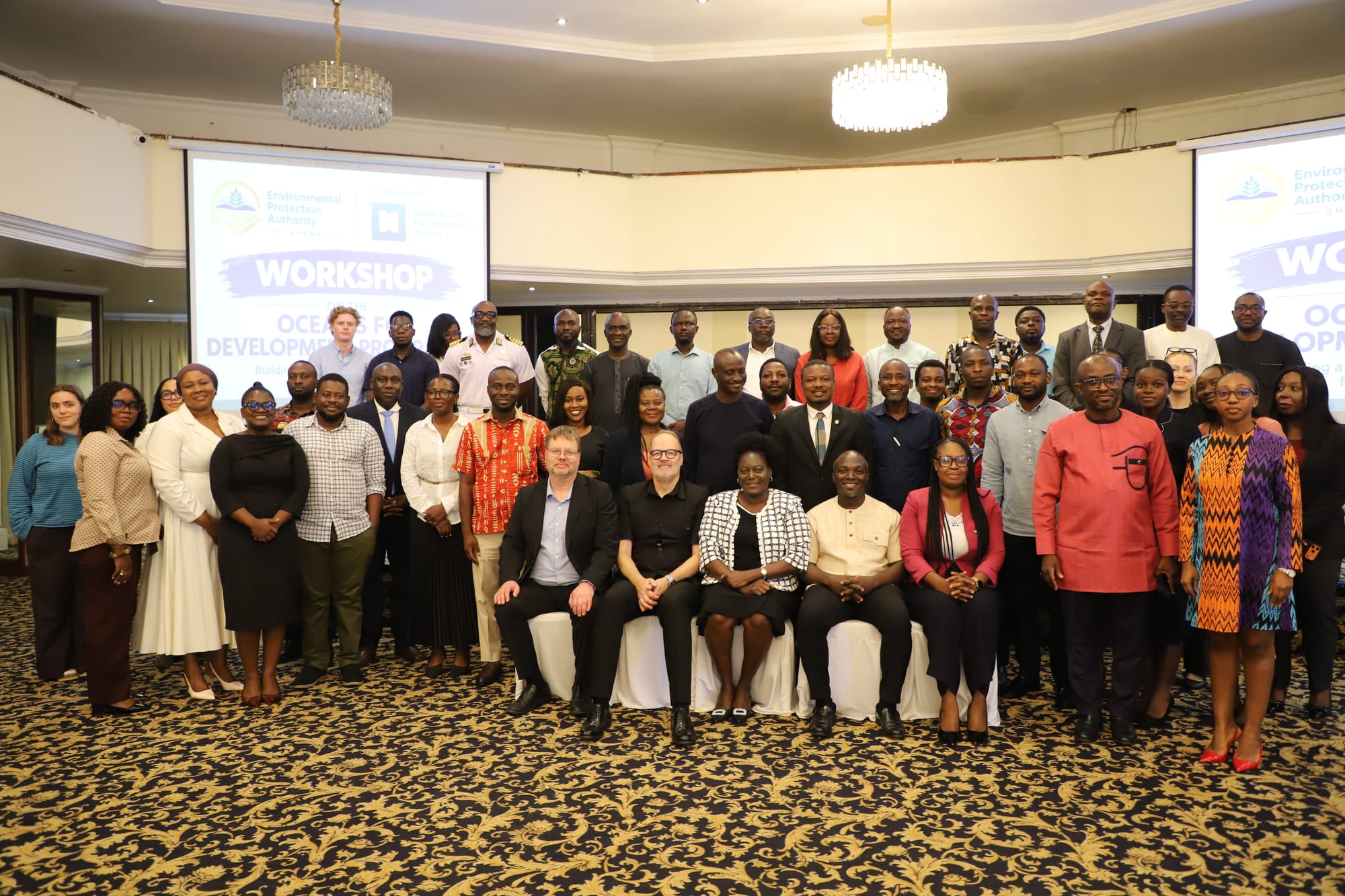
The EPA Introduction Workshop: Introducing the New Method, Data Challenges and the Way Forward
By Mikkel Auvi Raaen, & Anna Kongshaug, Photos by Baffour Dokyi
Background
On October 19th, Ghana and Norway signed a five-year agreement under the Oceans for Development programme, with Norway providing NOK 100 million in funding through the Norwegian Agency for Development Cooperation (NORAD). As an ocean nation, Norway contributes by sharing its expertise and experiences in marine spatial planning. The Norwegian Environment Agency (NEA) is responsible for facilitating the exchange of knowledge, with representatives who have relevant expertise visiting Ghana regularly to share their insights and experience.
The new program aims to develop a blue economy that is both resilient and inclusive. The program replaces Norway’s “Oil for Development program in Ghana,” and may be seen as a transition from a disputed sector in the Norwegian environmental discourse. Through this five-year collaboration, the overall goal is to promote responsible resource management, institutional strengthening, and sustainable economic growth in Ghana.
We were invited to join the workshop on marine spatial planning through an invitation from the Norwegian Environment Agency and EPA, together with other staff at CeST. The workshop took place at La Palm Royal Beach Hotel in Accra, where chief engineer Ragnvald Larsen represented the Norwegian Environment Agency. It lasted from the 22nd of September to the 24th of September, and featured discussions and perspectives by the aforementioned agencies. Fifty participants from forty different institutions took part in the workshop. The workshop was closely linked to global efforts to achieve the Sustainable Development Goals (SDGs) by 2030. NORAD highlights that achieving the SDGs requires a clean and healthy ocean. The purpose of the new program specifically addresses SDG 14, Life Below Water: “Conserve and sustainably use the ocean, seas and marine resources for sustainable development.”
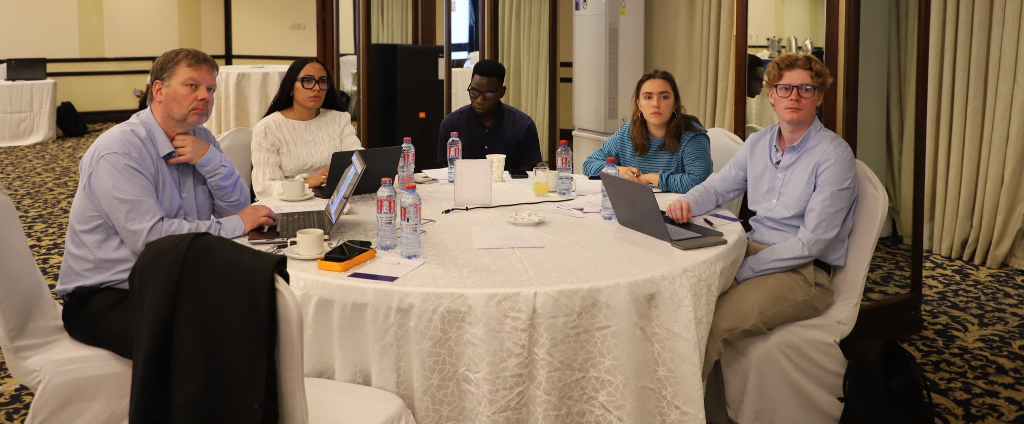
This article presents the reflections we, as interns from Norway’s University of Science and Technology (NTNU) from the programme Global Relations and Sustainable Development, at the Center for Sustainable Development (CeST) in Ghana, have after the workshop. It also explores the main topics and themes addressed during the workshop, leading up to the signing of the agreement.
Marine Spatial Planning and Mapping Environmentally Sensitive Assets
One of the main topics discussed during the workshop was environmental mapping, an essential part of the preparatory work for marine spatial planning. The purpose of environmental sensitivity mapping is to provide a transparent and scientifically grounded basis for decision-making related to environmental management, marine spatial planning, development activities, emergency preparedness, and long-term ecosystem stewardship.
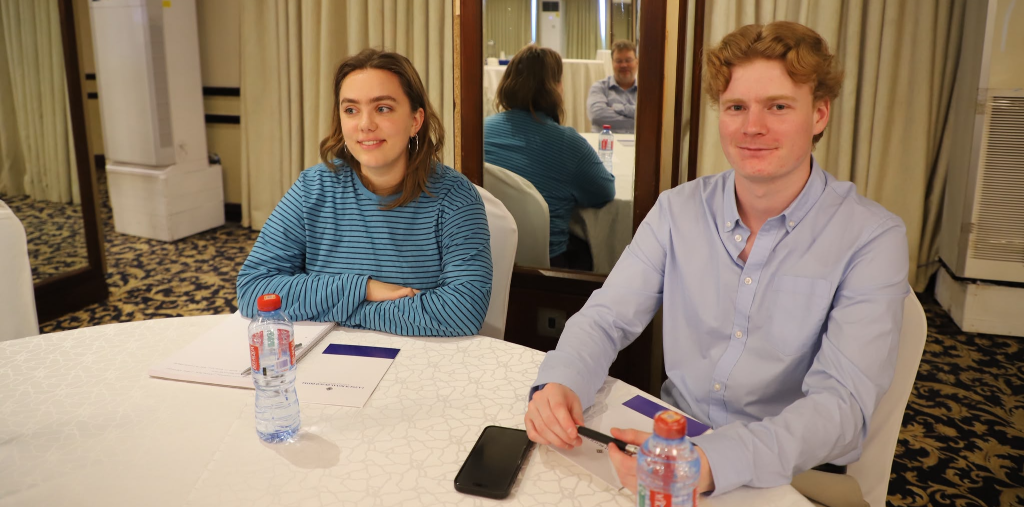
R-L: Anna Kongshaug & Mikkel Auvi Raaen at the workshop
Sensitivity mapping identifies values, pressures, conflicts, and consequences. However, final decisions remain the responsibility of authorities and policymakers. Marine Spatial Planning (MSP) is a process for understanding and managing how marine and coastal areas are used. These areas support a range of activities and interests such as nature conservation, tourism, fisheries, shipping and energy production. As these uses increasingly overlap, their planning requires a better understanding of where environmental values are located and what pressures and conflicts they may face and which may arise.
During the workshop, we explored how the MESA method, otherwise known as Mapping Environmentally Sensitive Assets, can support this process through environmental sensitivity mapping. The purpose of this is to provide a transparent and scientific basis for decisions relating to environmental management, MSP, emergency preparedness, and developmental activities. Its use supports long-term protection, development, and mapping of important marine and coastal ecosystems.
One of the central parts of the MESA approach is identifying environmental assets and socioeconomic assets and the different pressures which may affect them. These assets include species, habitats, coastal ecosystems, and important areas for human activities and livelihoods. The pressures these assets may endure refer to issues like pollution, environmental degradation, or even habitat disturbance. This method provides a structured way to view and compare different areas and understand where environmental concerns may require more attention or awareness.
The participants at the workshop were introduced to the MESA method, as previously described, and then divided into groups to discuss how the method could be applied to different areas along the coastline of Ghana. They actively engaged in the discussions and appeared to gain valuable insights from the exercise. During the MESA work and the test, which was completed at the conference, 24 layers were brought together from different sources. While these datasets were not real and existing data, the work of organising the mock data from different GeoPackages and systems, and then standardising them seemed to be a useful learning experience for the different actors.
Data and Communication
One of the recurring issues throughout the workshop was the importance of environmental data. Much of the discussion focused on what information is available, what is missing, how the data should be organised, and how existing datasets can be used. Solving these challenges is important for the continued contribution to marine spatial planning and environmental sensitivity mapping in Ghana.
As the discussions continued, it became increasingly clear that the challenge was not necessarily that relevant data did not exist; it had more to do with limited sharing and trust in the existing data. It emerged from the discussions that there were several practical reasons why data was not always readily shared. Limited resources for updating and maintaining datasets, combined with a reluctance to share data that some stakeholders viewed as part of their work or as a source of income, emerged as key challenges. Ragnvald Larsen described the data challenge as follows: “The data often exists. What is missing is a way to find it, trust it, and keep it.”
The discussions showed that there is a quite clear distinction between actually having data and being able to use the data. The datasets can exist within different institutions, but if the other actors don't know that it exists, cannot access it, or do not know the limitations and how it was collected, its value for environmental planning is quite limited and diminished. Moving forward, this will be an important area to focus on.
Cooperation Between the Different Stakeholders
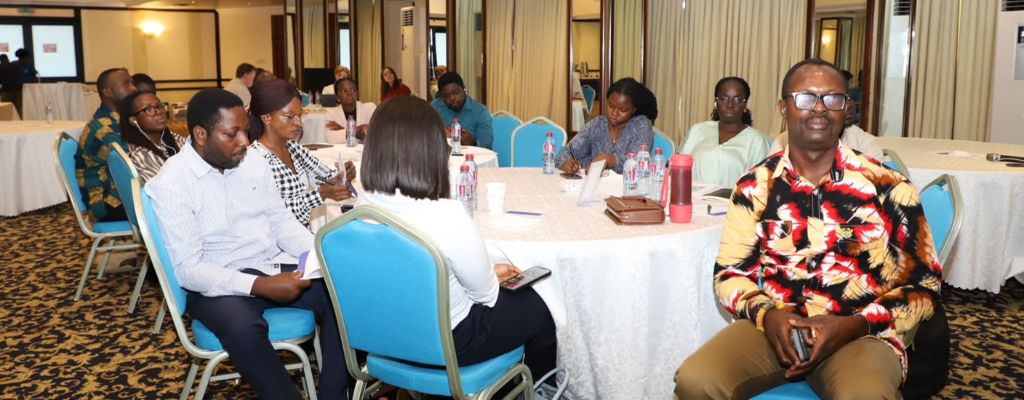
Collaboration was an important theme throughout the whole workshop. Bringing together representatives from different research institutions, government agencies, and other organisations created a lot of opportunities to exchange knowledge and gain a better understanding of all the stakeholders’ work across the environmental sector in Ghana. At the same time, it was quite visible that cooperation between institutions was not always straightforward. During the discussions, it became apparent that some participants were unfamiliar with the work other institutions were doing, which further revealed some uncertainty and responsibilities with overlapping mandates. This highlighted the importance of clear communication and coordination for better collaboration, especially in this case where several institutions are working toward similar objectives.
Discussions and Conclusion
The Oceans for Development workshop in Accra provided us with valuable insight into the opportunities and challenges involved in strengthening MSP and sustainable ocean governance in Ghana. As interns from the Global Relations and Sustainable Development programme at NTNU, one of our main takeaways was the importance of collaboration and communication between the different stakeholders. The discussions really highlighted how limited and fragmented access to and sharing of data was.
The overlapping institutional responsibilities seemed to make it challenging to take the environmental knowledge into effective decision-making. At the same time, it was incredibly interesting to see the cooperation between Norwegian institutions and their Ghanaian counterparts. It showed us a good practical example of how international partnerships can be formed and help facilitate knowledge exchange and strengthen the capacity needed to address sustainability challenges.
Further, the transition from Oil for Development to Oceans for Development has also shown an important shift. While Ghana is likely to continue utilising its petroleum resources for economic development, the substantially increased focus on the sustainable management of its marine resources and the health of related ecosystems is encouraging. MSP and environmental sensitivity mapping help identify environmental values, conflicts, and consequences, which will support decisions that consider both the environmental protection and economic development of these areas. The efforts these institutions are putting into this are important for marine biodiversity and the livelihoods and wellness of the people who depend on healthy marine environments and oceans.
Overall, the workshop reinforced our understanding that sustainable development requires more than just data and methods. It depends on how institutions are able to share their knowledge and data, and coordinate their responsibilities so that their knowledge can be turned into practical action. For us, this wonderful experience demonstrated how economic development, environmental sustainability, and international cooperation are closely connected. The long-term value that Oceans for Development will have for Ghana and the world will depend on the institutions and how these principles are put into practice, but it will hopefully help Ghana develop a blue economy that is resilient and long-lasting.