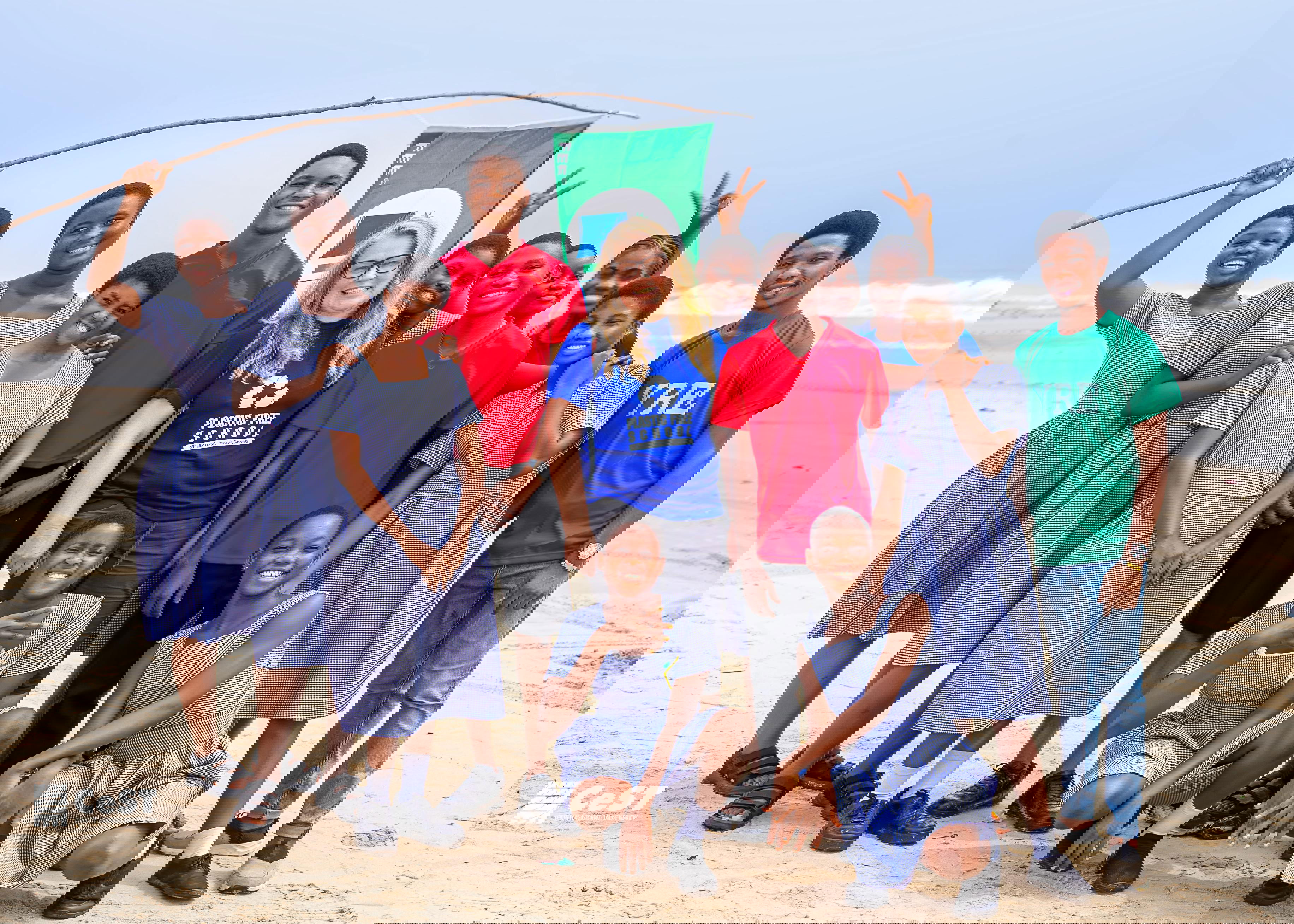
Hilde Opoku, Co-Founder, CeST
Photo: Isaac Akpa & Hilde Opoku
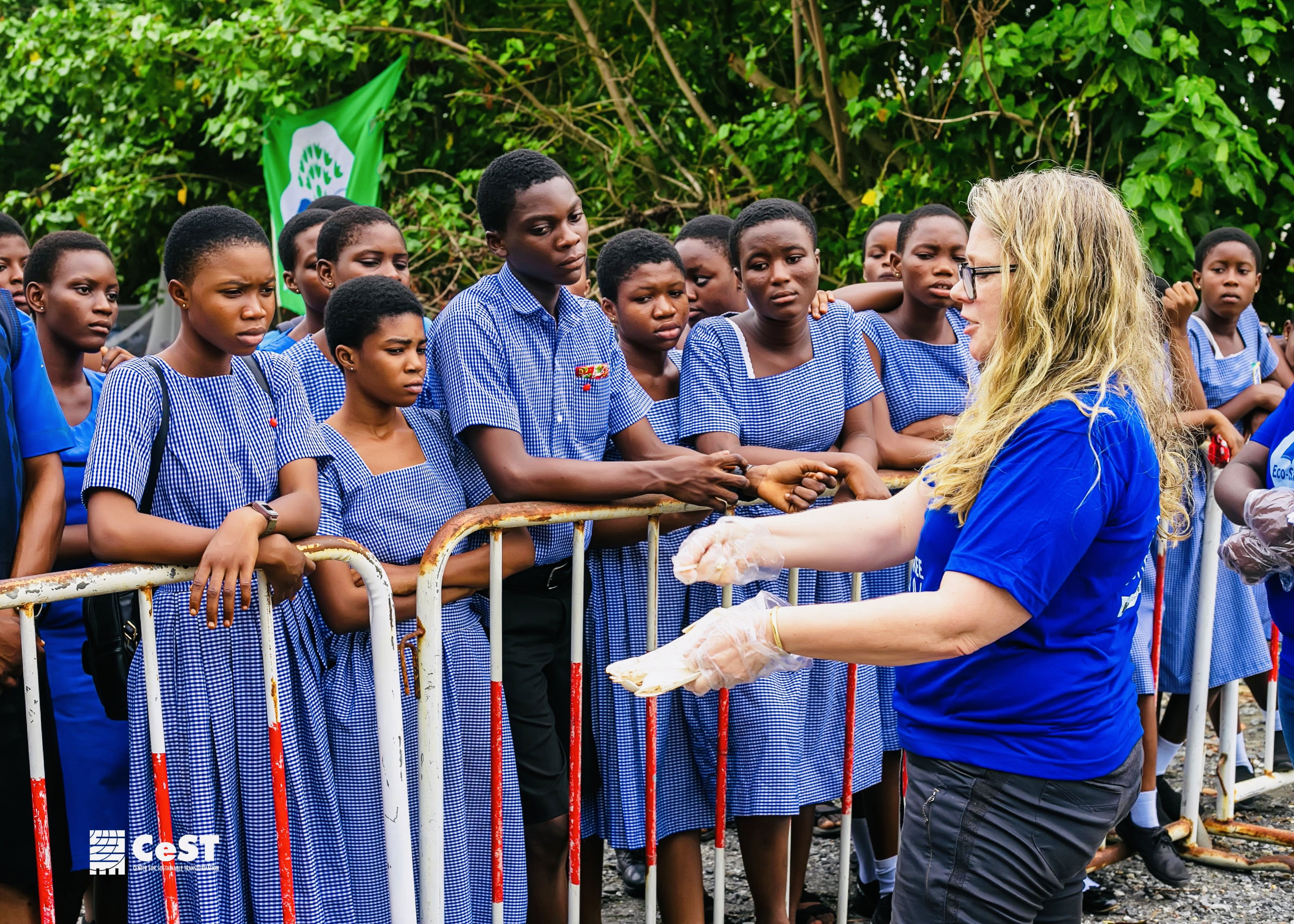
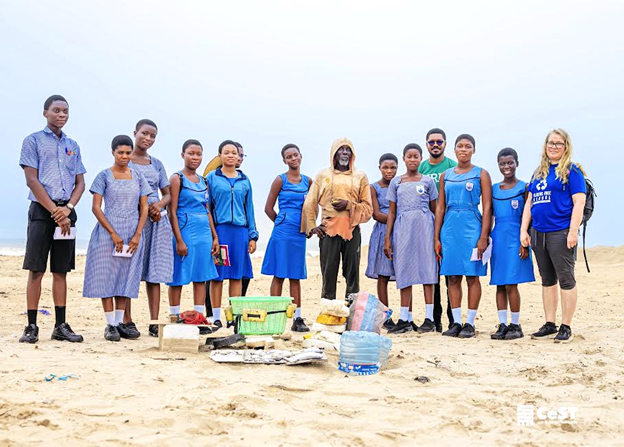
On December 4th, the Center for Sustainable Transformation (CeST) carried out the Outdoor Classroom component of the Plastic-Free Schools program, bringing students from Achimota Anglican Primary School and Kinbu Senior High Technical School to Labadi Beach for a full day of hands-on learning. The purpose of the day was to help students understand the link between the plastic waste generated in our homes and communities, how it ends up in the ocean, and how both policies and everyday practices shape this reality in Ghana today. The Outdoor Classroom is part of CeST’s broader approach to Education for Sustainable Development (ESD), implemented through SDG 4.7, and directly connected to SDG 14.1, which aims to prevent and significantly reduce marine pollution, particularly plastic waste from land-based sources. Rather than addressing these links only in theory, the program is designed to allow students to observe, analyse, reflect, and act.
Plastic-Free Schools: Microplastics, Policy, and Education for Sustainable Development
The Labadi Beach Outdoor Classroom formed part of the Plastic-Free Schools project, with a specific focus on microplastics and their impacts on marine ecosystems, human health, and livelihoods. CeST implements the project through Eco-Schools Ghana and is part of a global initiative coordinated by the Basel, Rotterdam and Stockholm (BRS) Conventions, with funding provided by Norad. In Ghana, the project is implemented in collaboration with national education authorities, including the Ministry of Education and the Ministry of Environment, Science and Technology (MEST), ensuring alignment between environmental policy priorities and educational practice.
Plastic-free Schools are grounded in Education for Sustainable Development (ESD)—an approach that enables learners to understand the connections between environmental integrity, social wellbeing, and economic systems, and to act on this knowledge in their everyday lives. Anchored in SDG 4.7, ESD encourages learners not only to acquire knowledge but also to analyse causes, reflect on solutions, and engage as active citizens. In this project, ESD serves as the vehicle through which SDG 14.1 is translated into concrete learning experiences for students and teachers.
Citizen Science on the Beach
The day began with putting the day in context and an introduction to a citizen science exercise.
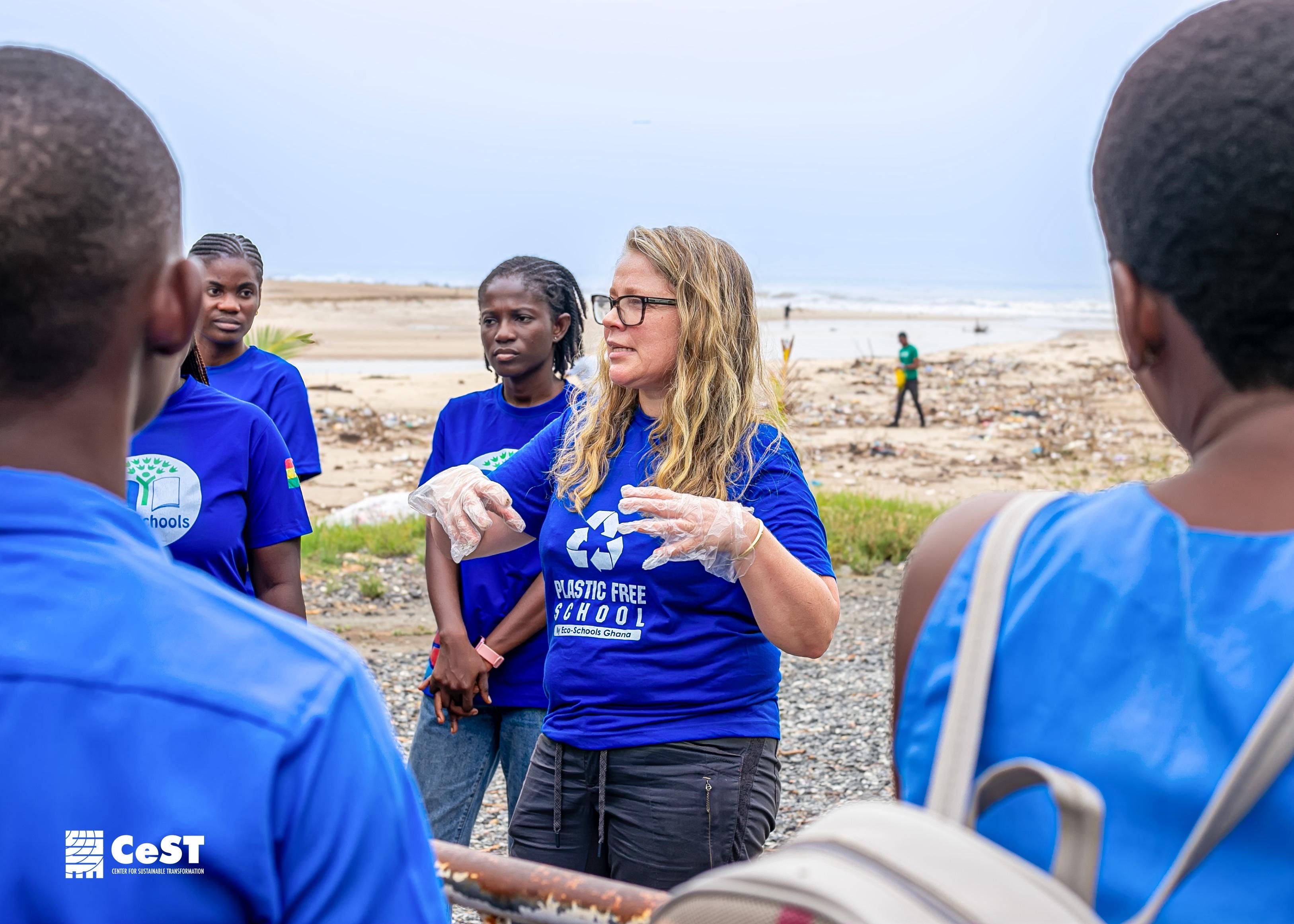
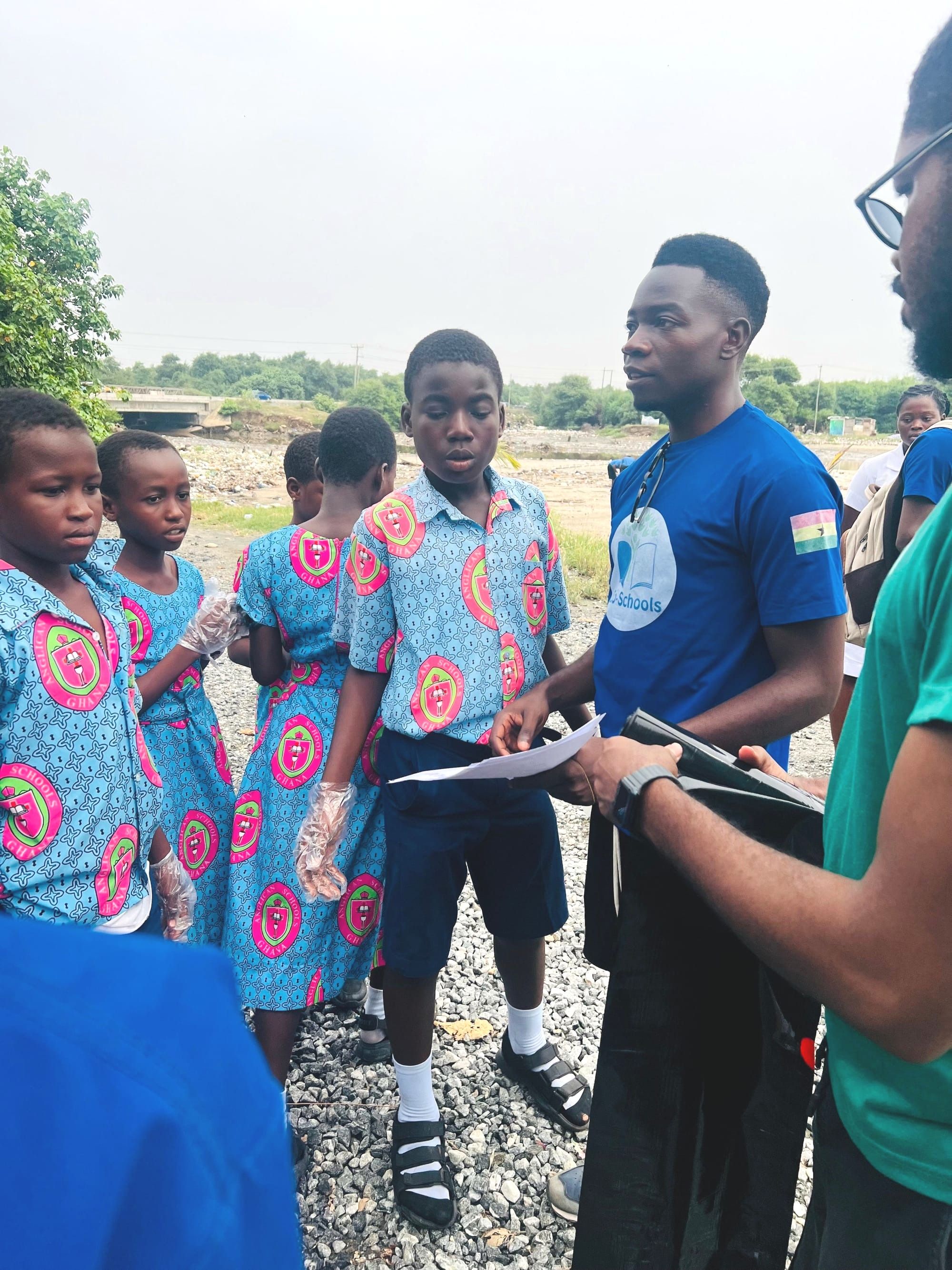
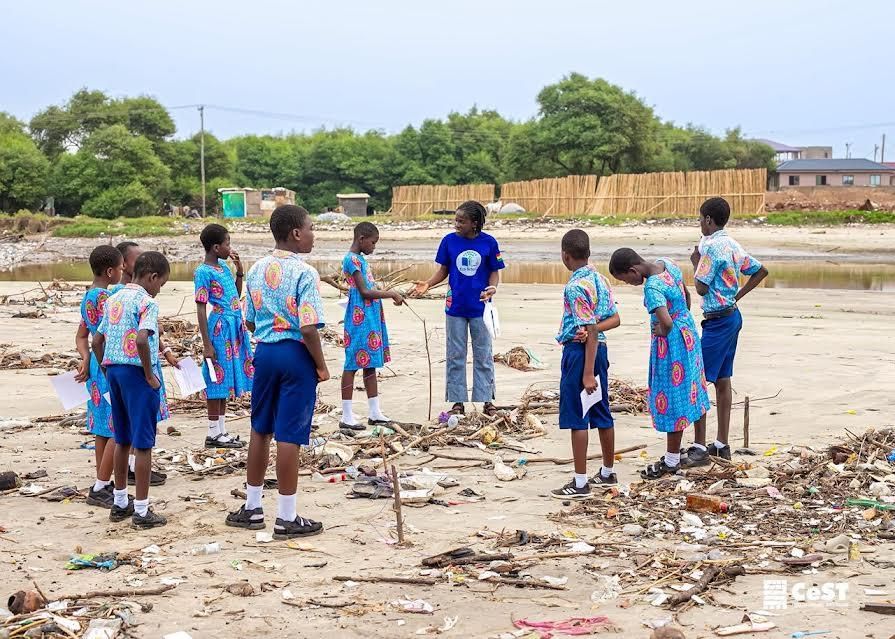
Before the students arrived, the CeST team marked out square-metre plots along the beach using string. Working in groups, the students analysed the plastic waste, counting quantities. Each group was supported by an Eco-Schools or Young Reporters for the Environment (YRE) assistant to guide discussion and reflection.
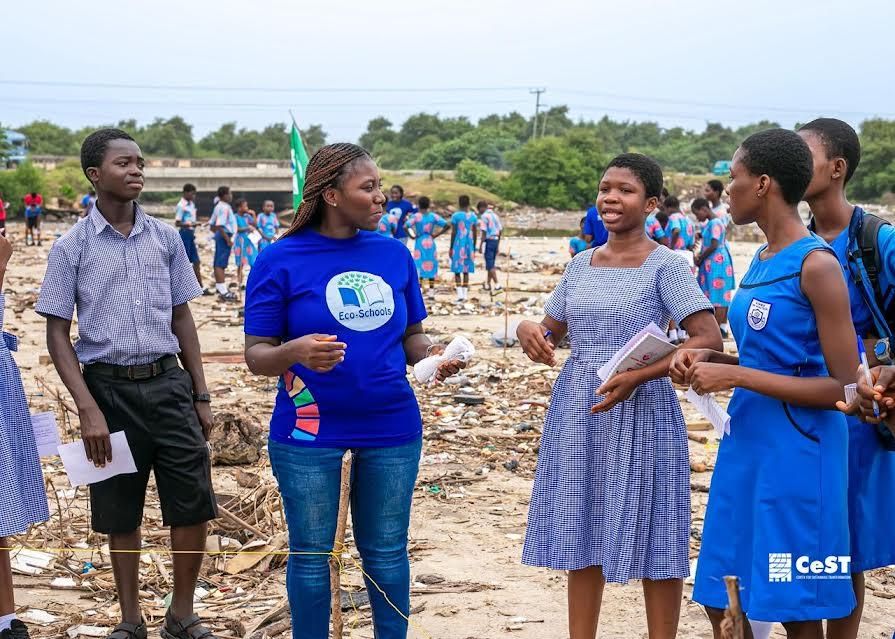
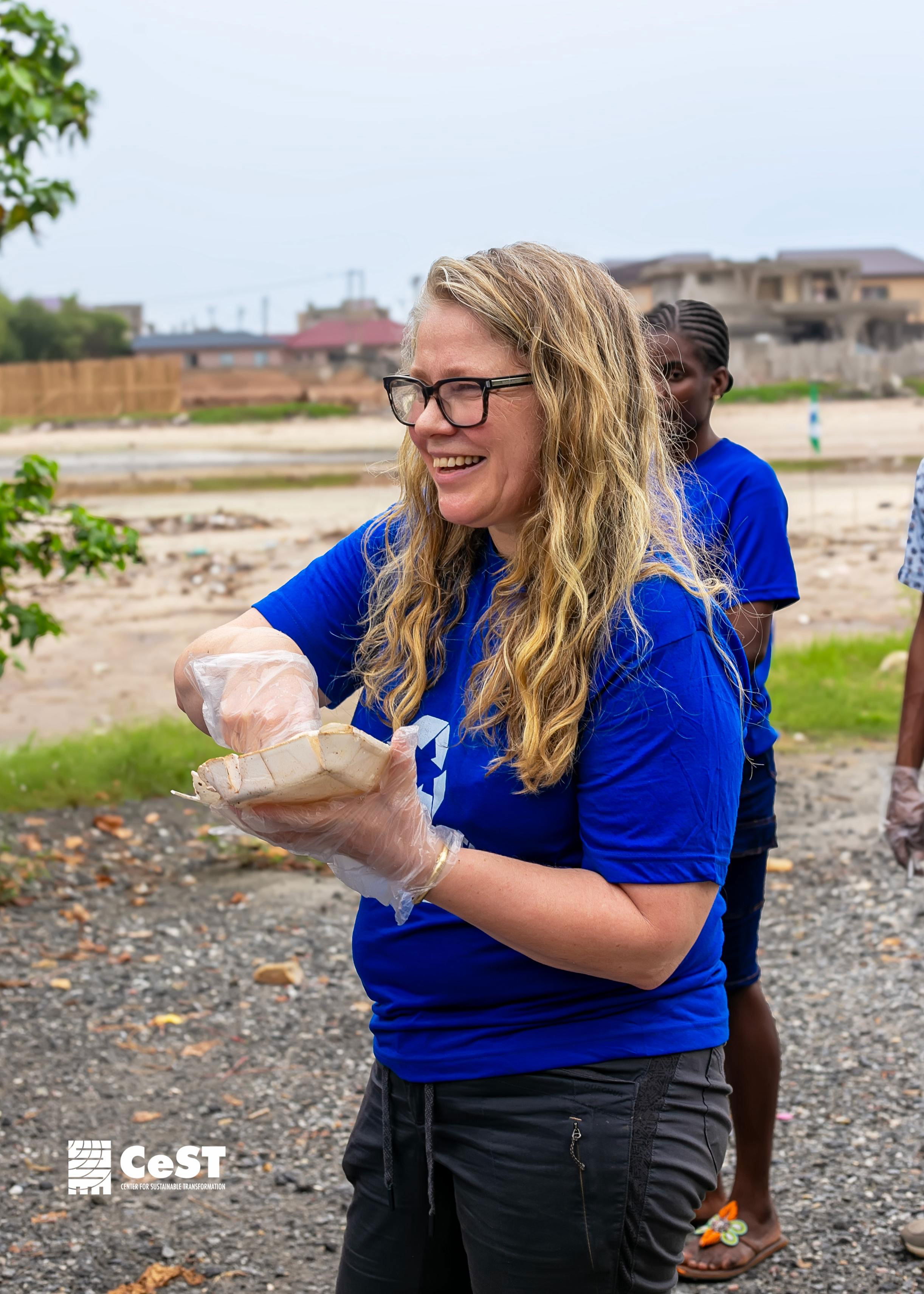
As expected, the students found very few sachet water bags or plastic bottles. These items already have economic value in Ghana’s informal recycling system and are quickly collected and sold. In contrast, plastics with no value and no take-back system—such as styrofoam clamshells used for takeaway food, single-use plastic cutlery, toothbrushes, and fragments of synthetic materials—were found in large quantities.
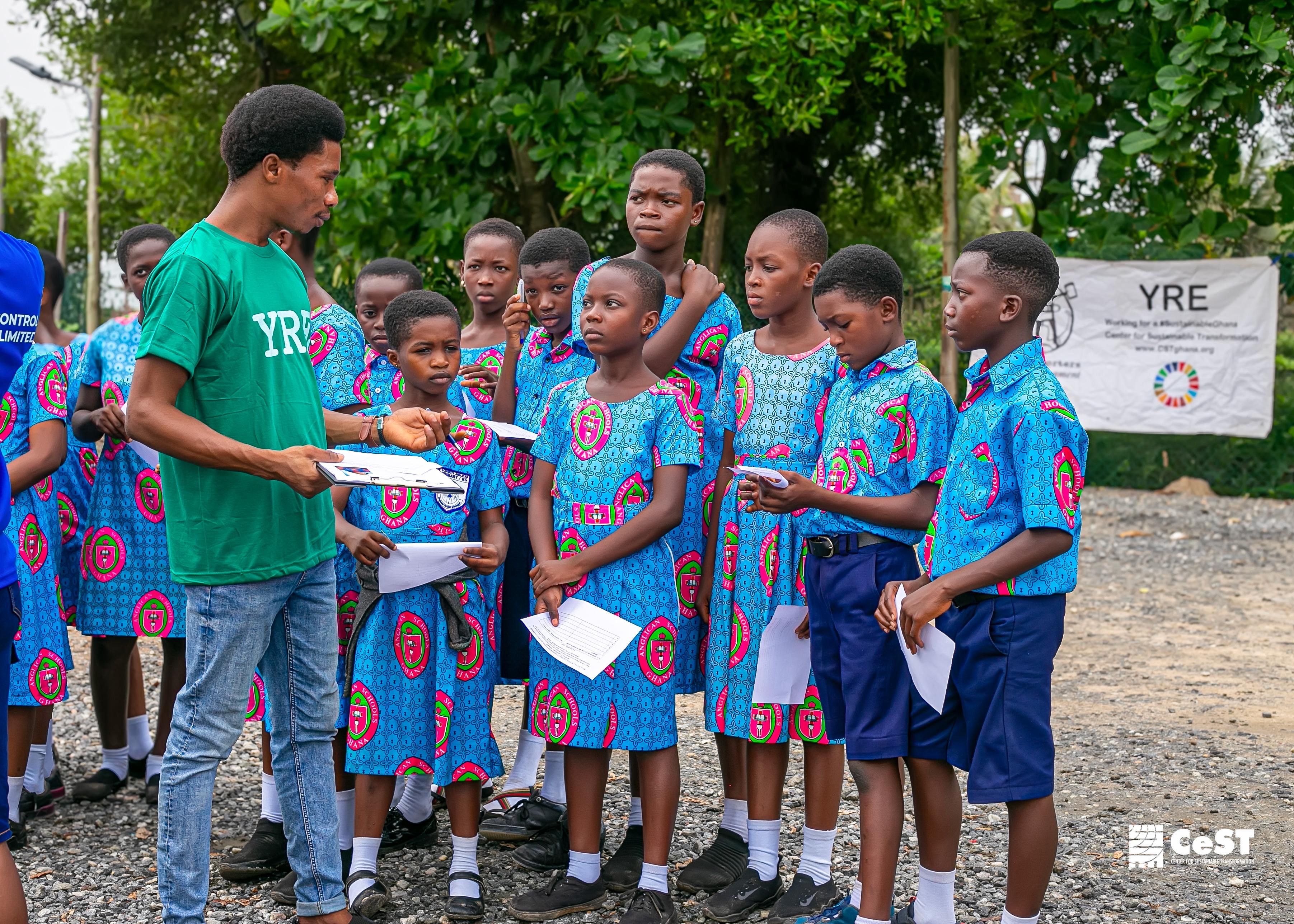
This observation led to strong discussions about why certain plastics end up in the ocean while others do not. Students connected what they saw on the beach to what they had already learned in the classroom: that waste does not disappear, that economic incentives matter, and that policies shape behaviour. One moment stood out clearly. When asked what needs to improve to stop plastic from reaching the ocean, a 10-year-old girl answered simply: “We need better policies.” For us at CeST, this felt like a breakthrough moment!
Microplastics, Health, and Livelihoods
Earlier in the day, students had been introduced to the link between plastic waste, marine ecosystems, and human health. Using recent research, facilitators explained that microplastics are now present in the human body at levels equivalent to a small plastic spoon. This became tangible during the citizen science exercise itself, as students saw how styrofoam breaks into smaller and smaller pieces simply by handling it.
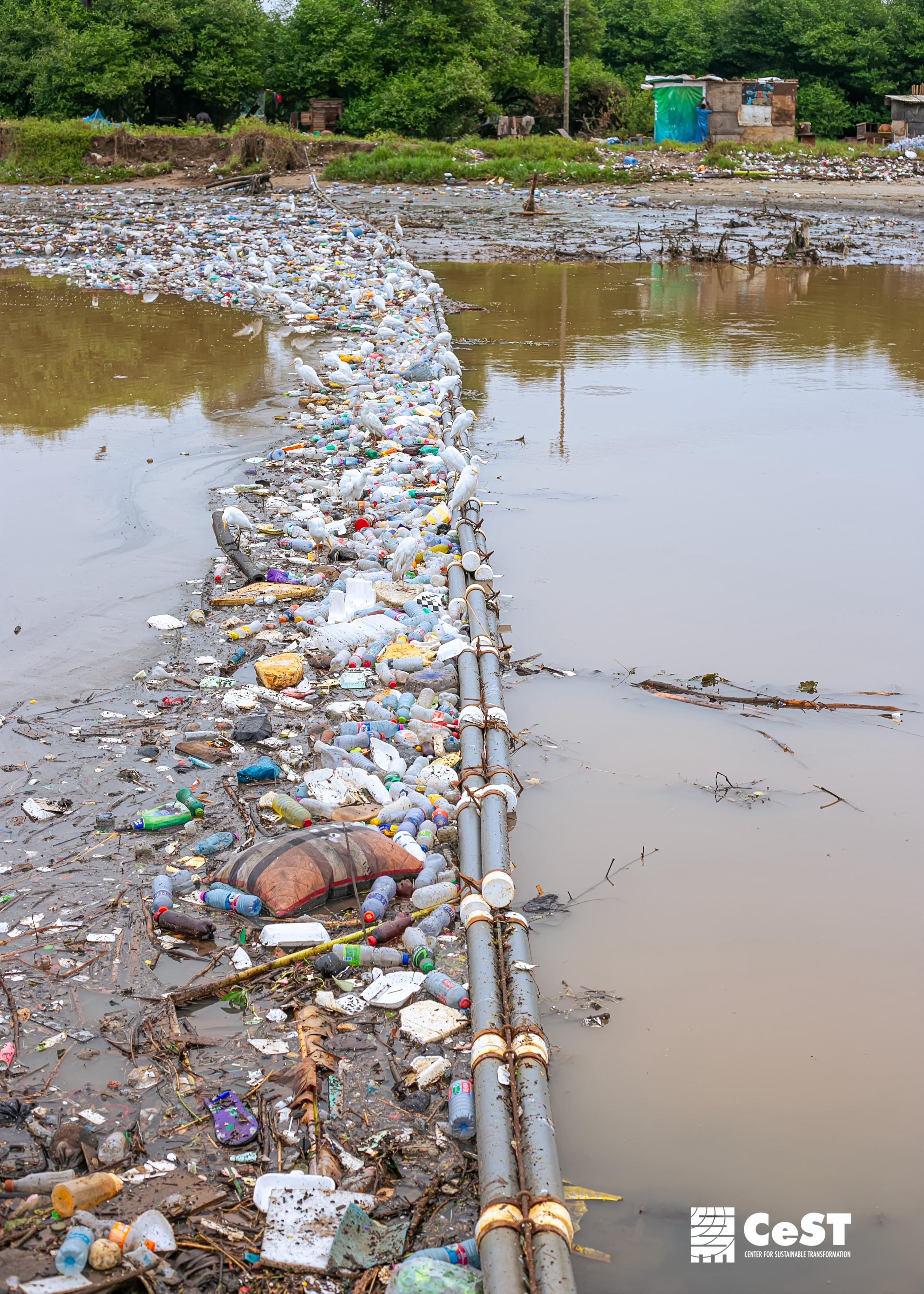
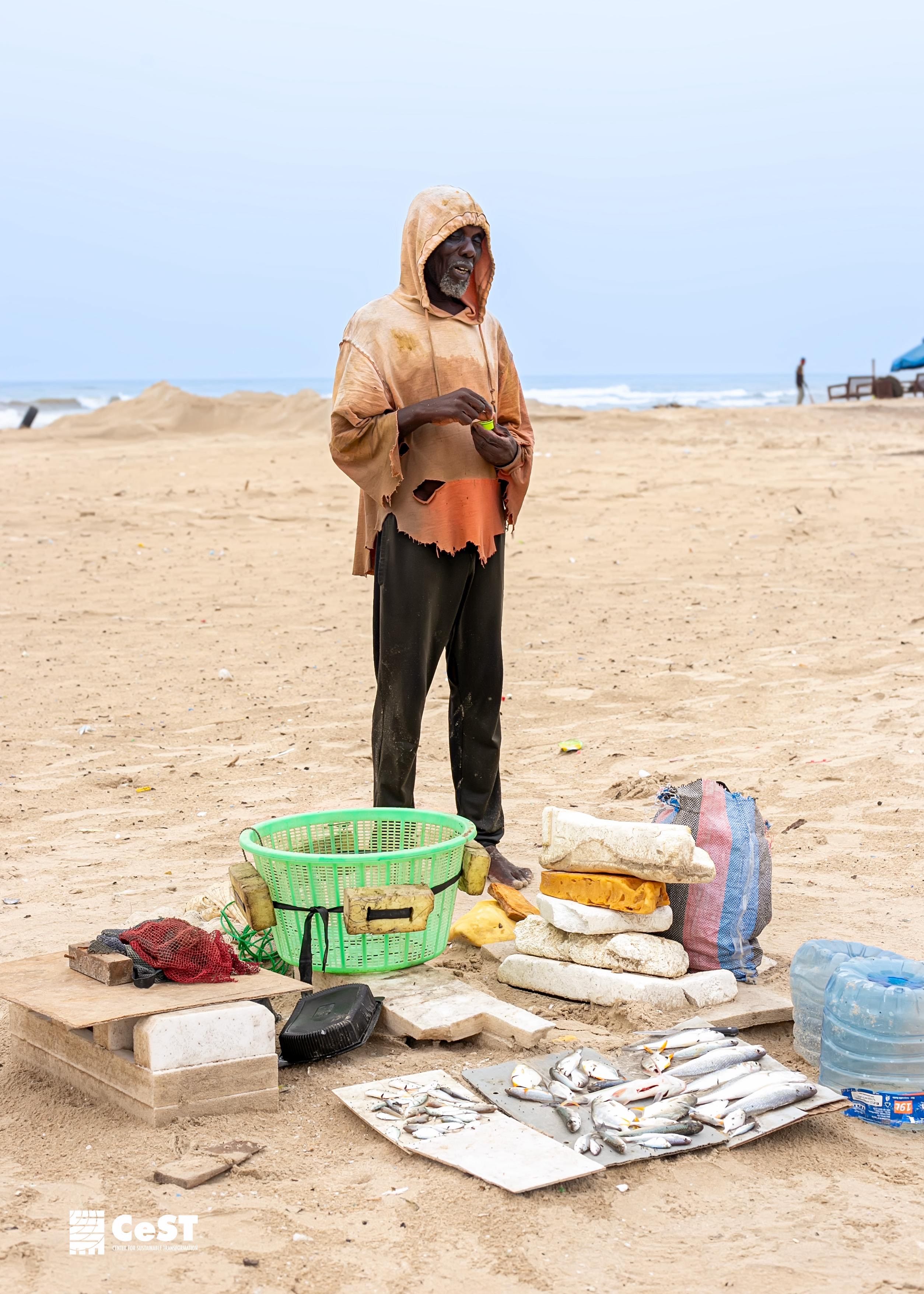
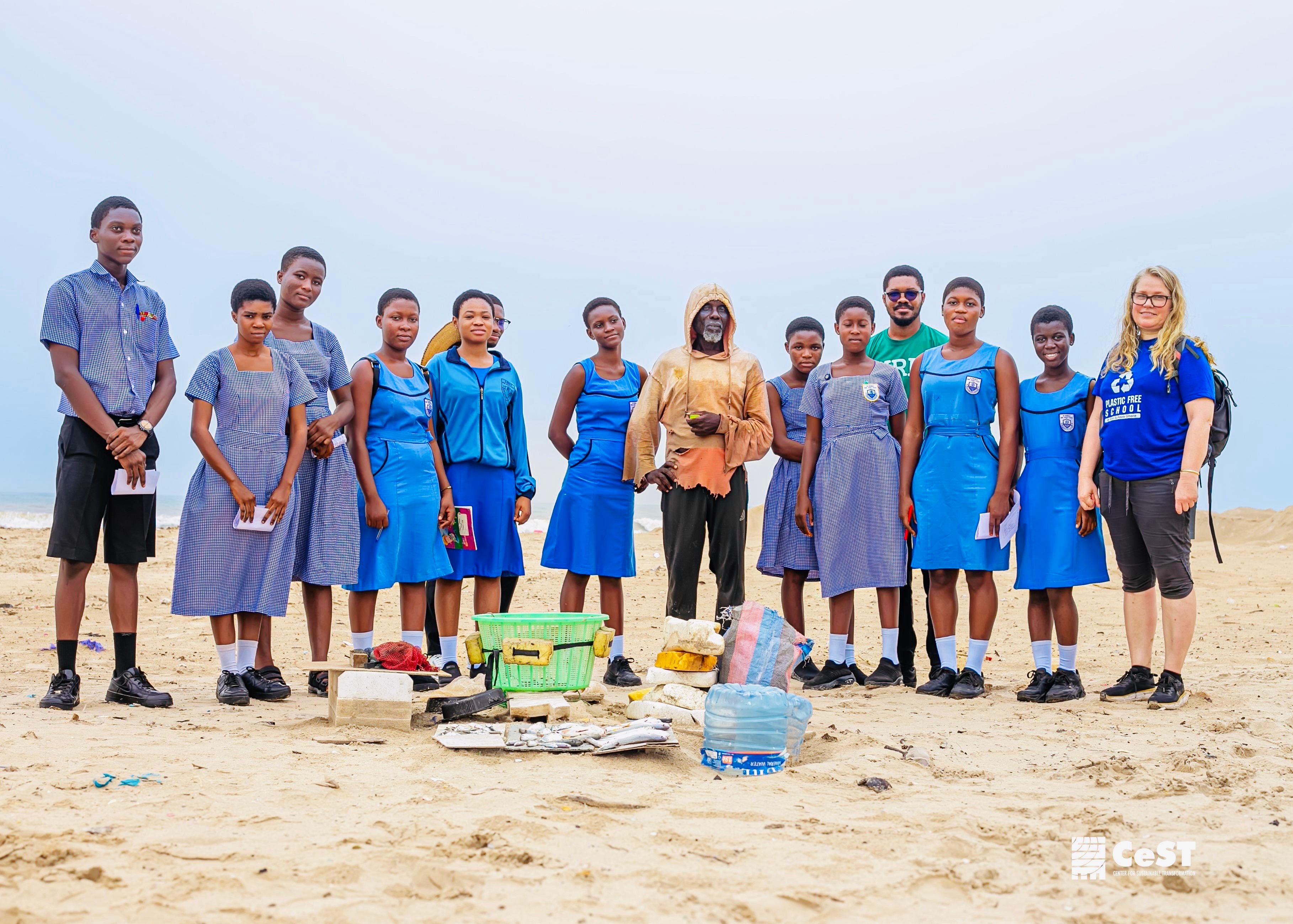
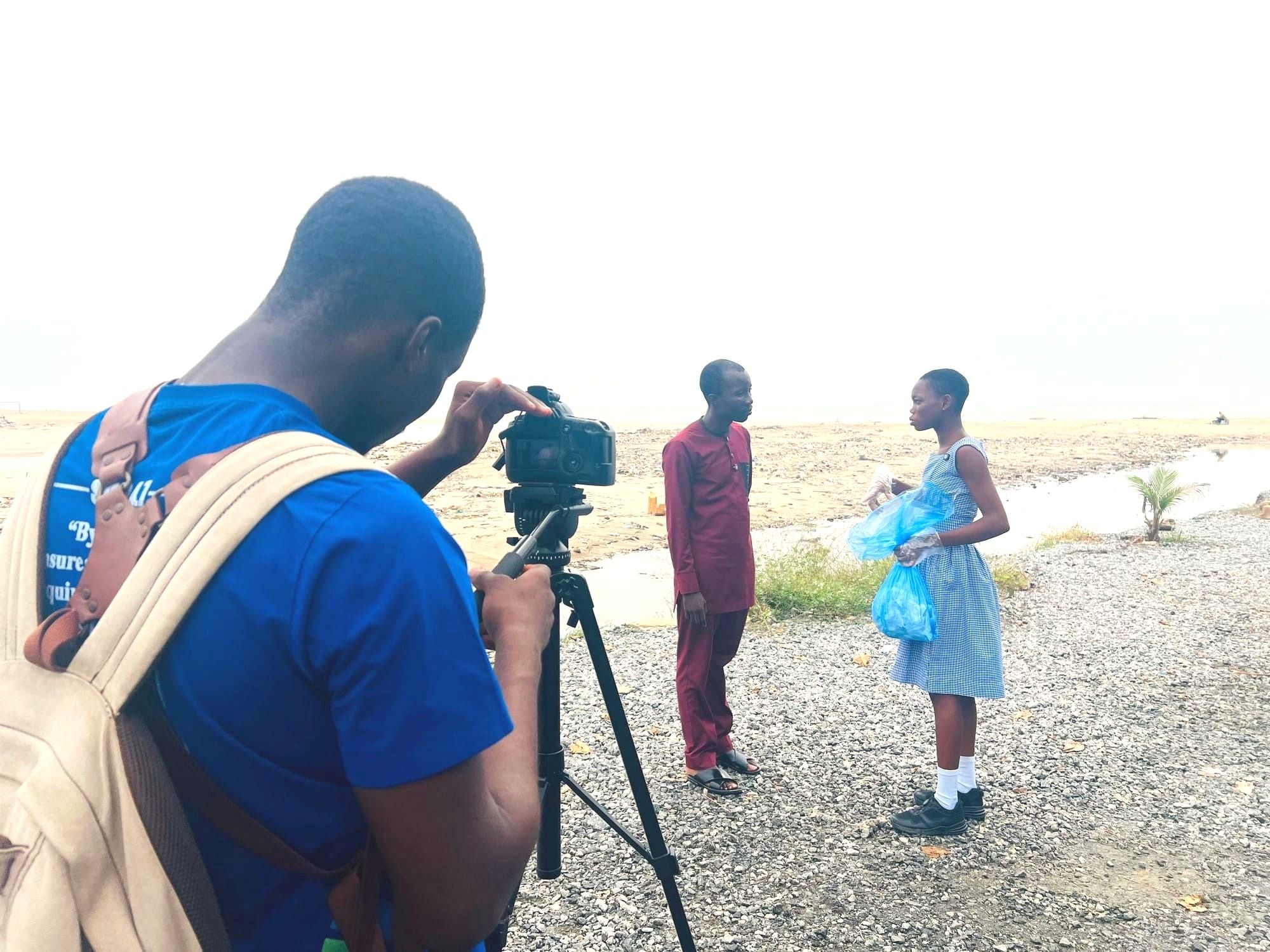
These reflections were deepened through an encounter with a local fisherman sitting at the edge of the Labadi Lagoon and the ocean. With the help of a Kinbu student translating fromGa to English, he explained that he had been fishing at Labadi since the 1970s. Ten years ago, fishing for a few hours early in the morning would fill his basket. On this day, after fishing since 3 a.m., his catch by late morning was minimal.
When asked why, he pointed to the rubbish. The waste, he explained, scares the fish away and has made the area unlivable for them. This conversation brought the concept of marine pollution into direct contact with livelihoods, food security, and the lived realities of communities along one of Accra’s most central beaches.
Health, Movement, and the Beach Cleanup
Because the purpose of the Outdoor Classroom Day was to explore the environmental, social, health, and economic dimensions of sustainable development together, the programme also included a Sports and SDGs session before the beach cleanup. Sports and SDGs are a CeST initiative that uses physical activity as a platform to engage participants in conversations about the SDGs while promoting health and wellbeing.
Following the warm-up, the students took part in a structured beach cleanup exercise. They were assigned different categories of waste to collect, allowing them to test whether the patterns observed in the citizen science exercise would also appear at a larger scale. The results confirmed their earlier findings: very few sachet water bags, bottles already collected in nets, and large quantities of styrofoam, discarded sandals and textiles.
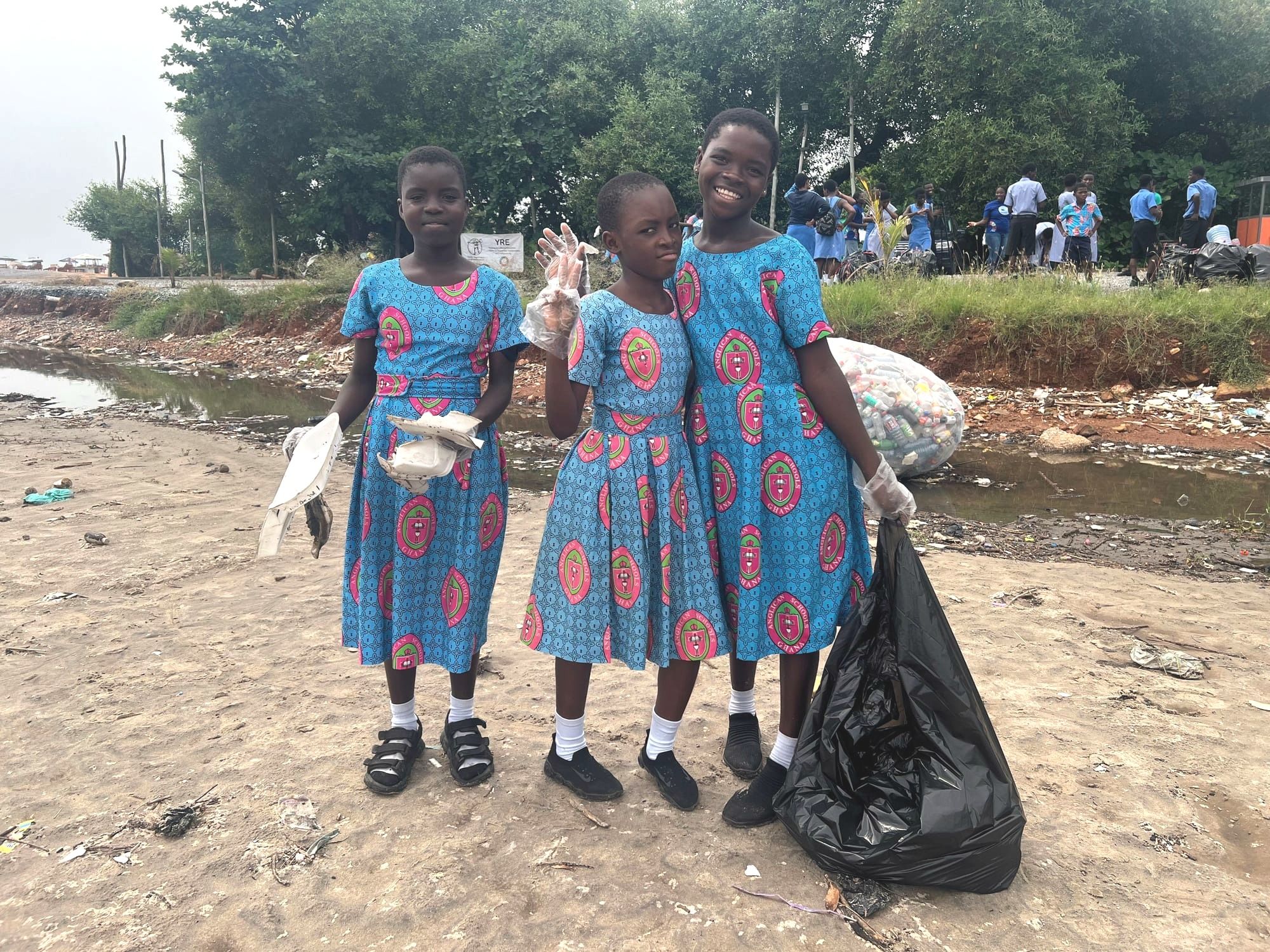
All collected waste was documented and added to the day’s dataset, reinforcing the link between observation, action, and learning.
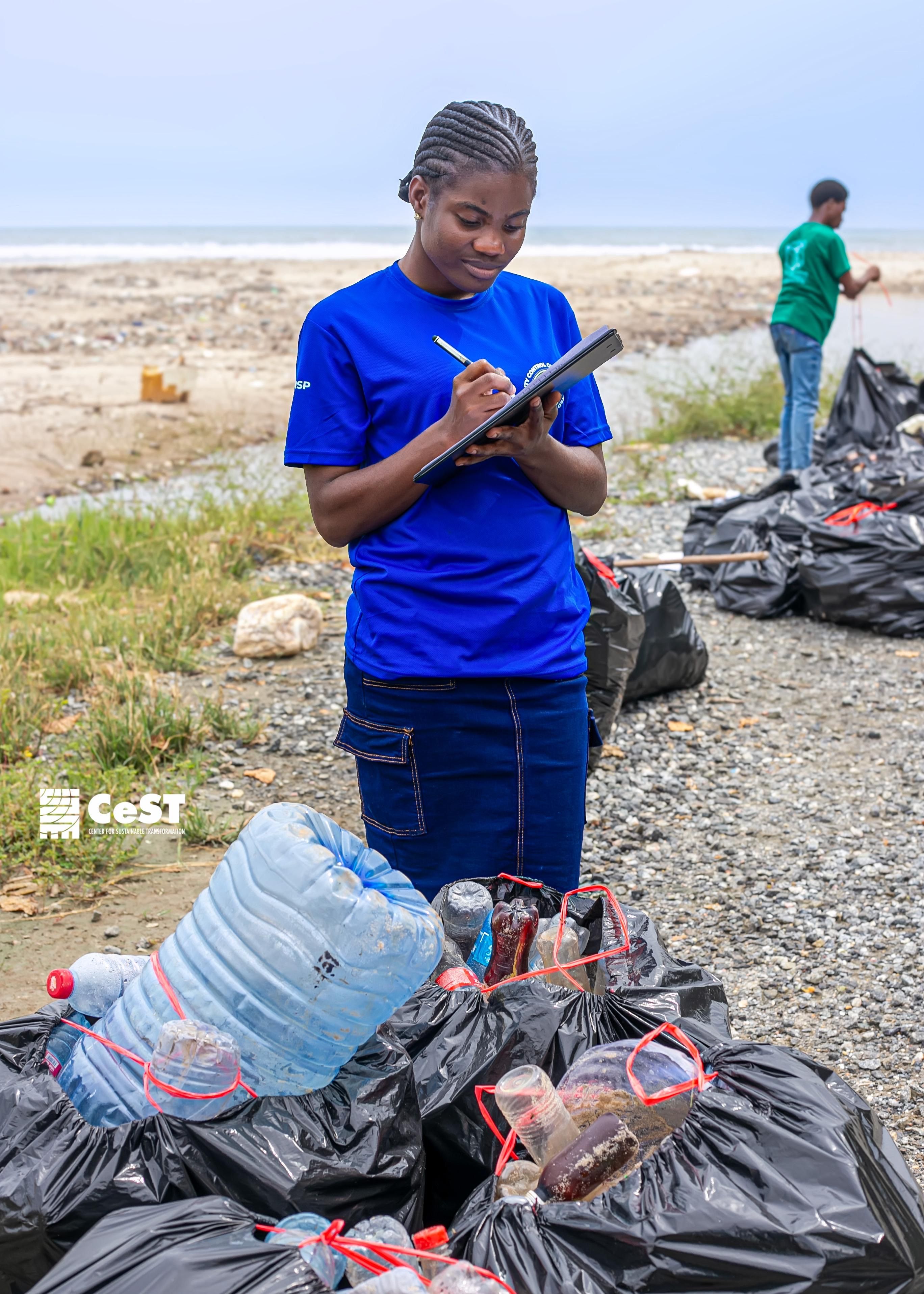
The Sachet water bags were not many, but we collected the waste from the students' drinks to take back to their schools for further sale when they visit Trashy Bags Africa to see an example of take-back and upcycling of plastic waste, given a value.
Closing the Loop: Culture, Alternatives, and Practice
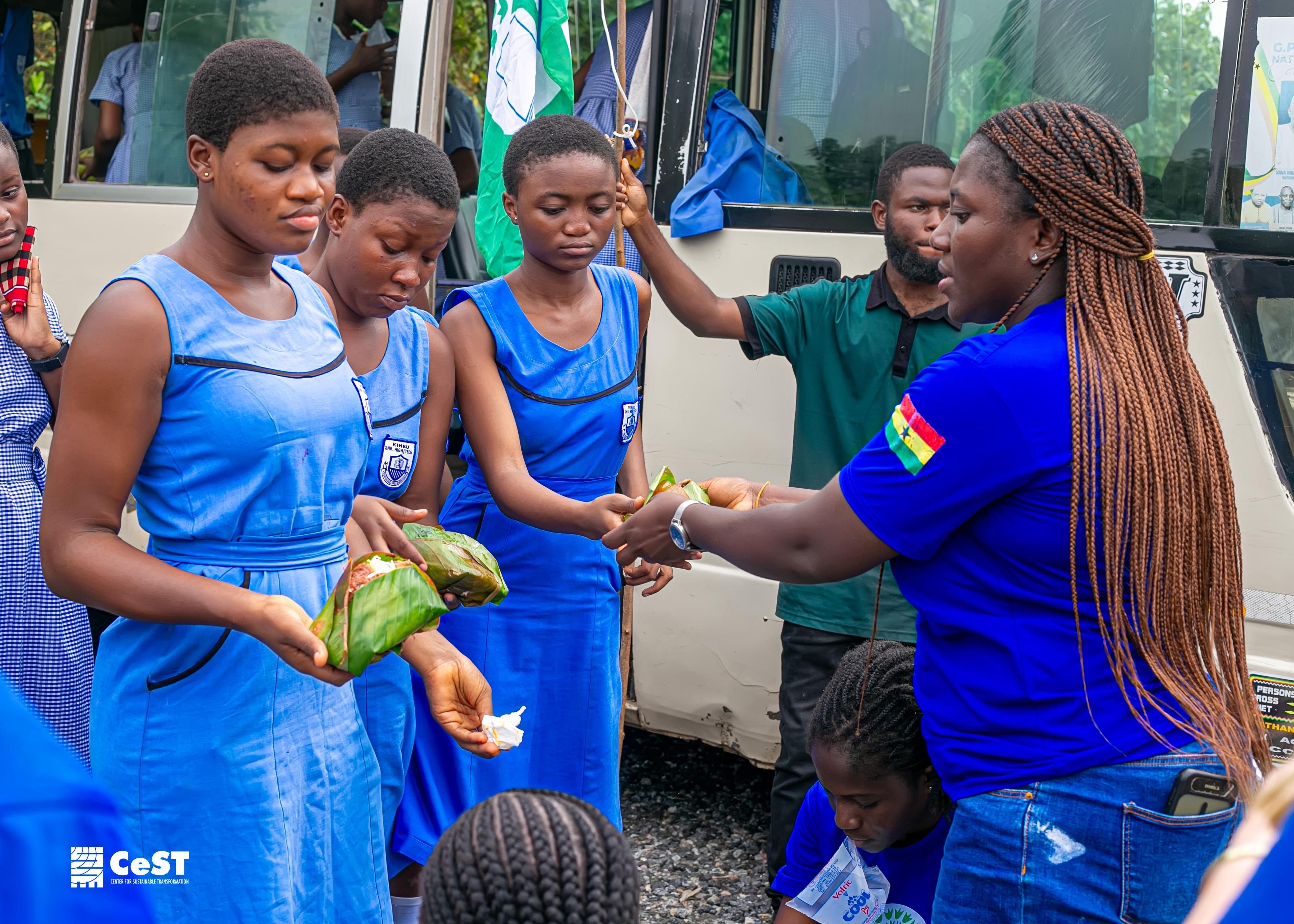
To complete the learning cycle, CeST prepared lunch for everyone using a traditional, plastic-free method. Food was served in banana leaves, demonstrating alternatives to single-use plastics that already exist within Ghanaian culture.
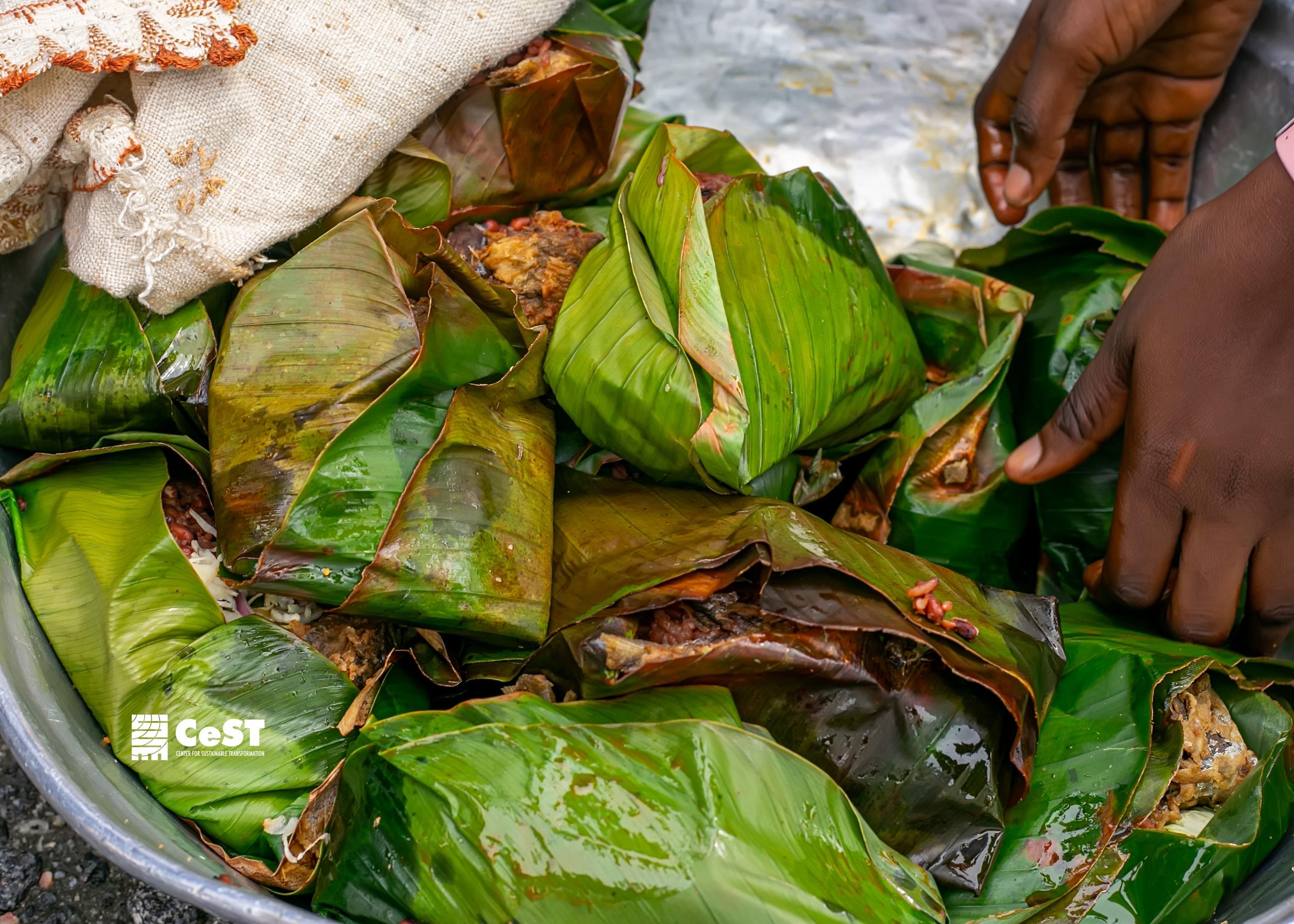
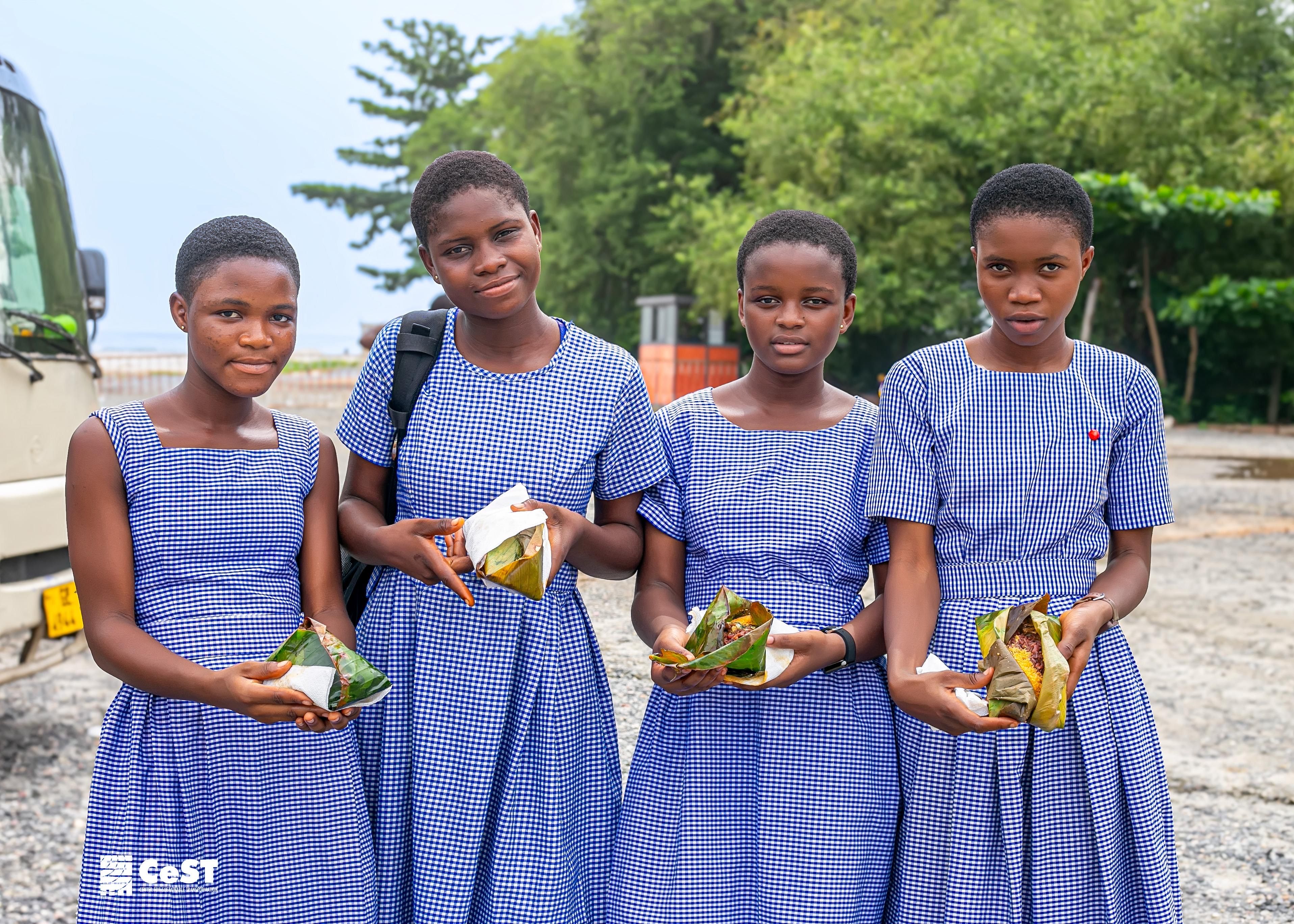
This moment generated enthusiasm and pride among the students, many of whom shared that their parents and grandparents had spoken about these practices at home.
Students, teachers, assistants, and drivers all shared the meal, ending the day with a practical demonstration of how everyday choices can reduce plastic waste and microplastics entering the ocean.
ESD in Practice: Lessons from the Outdoor Classroom
Through two phases of the Plastic-Free Schools program, CeST has demonstrated that Education for Sustainable Development, particularly SDG 4.7, can be implemented in concrete, meaningful ways. The Labadi Beach Outdoor Classroom shows how SDG 14.1 can be addressed through education that connects policy, economics, health, culture, and lived experience.
At the same time, the day highlighted real structural constraints. Hands-on, place-based learning requires resources—knowledge, committed educators, and funding, particularly for transportation. Whether in Ghana or Norway, the cost of moving students out of the classroom and into real-world learning environments remains a challenge. CeST’s long-standing collaboration with Eco-Schools in Trondheim illustrates how public support, such as free school transport during off-peak hours, can make experiential learning more accessible.
While Ghana’s transport system differs, the lesson is clear: if practical, experiential learning is to become a core part of Ghana’s education strategy, mechanisms must be developed to support it.
The outcome of this Outdoor Classroom Day—the lessons learned, the data collected, and the visibly cleaner beach—shows that this way of learning engages both students and teachers. When education is rooted in real-life challenges, purpose and impact become strong motivators for learning.